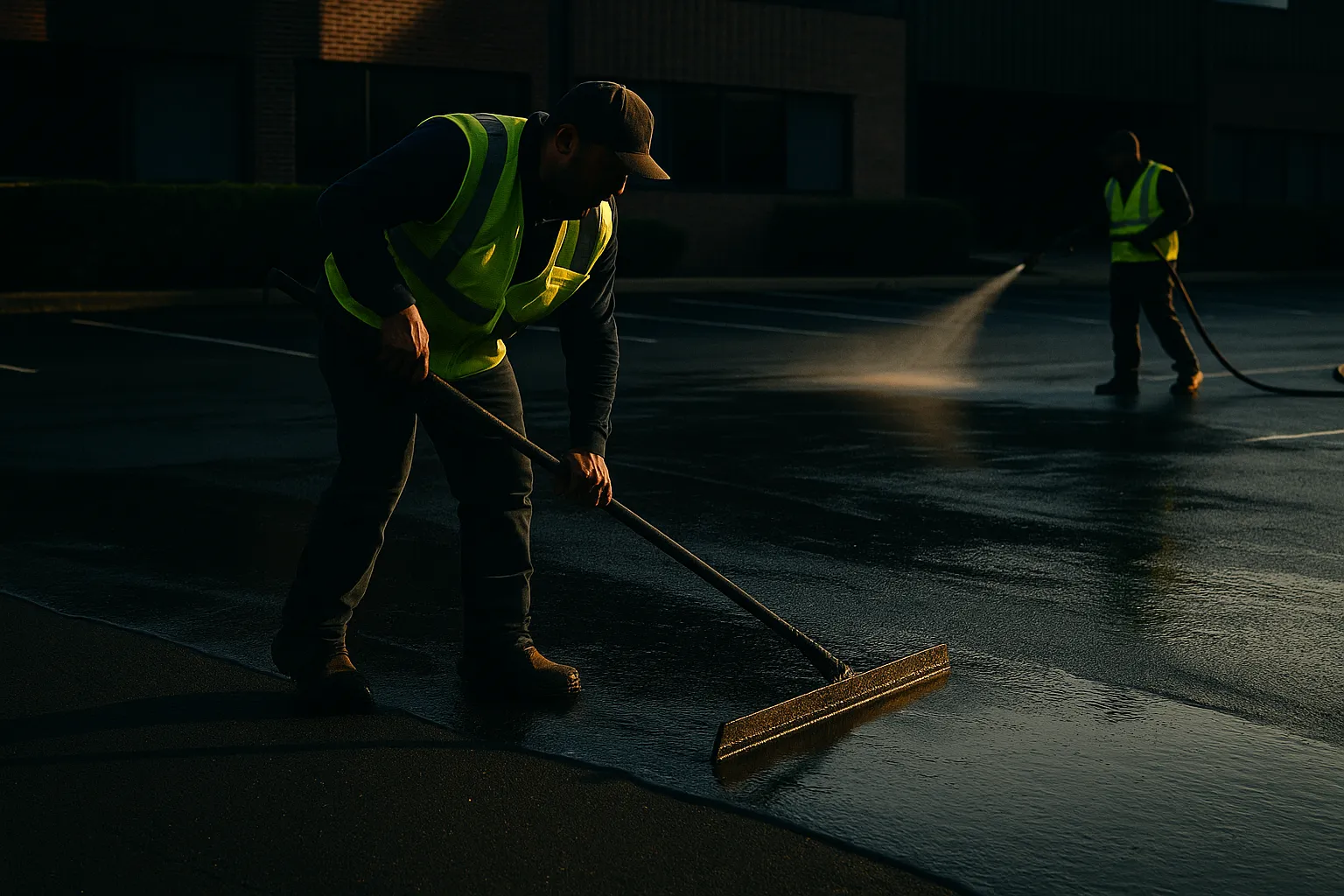
Commercial Sealcoating
Protect Your Asphalt. Double Its Lifespan. Reopen By Morning.
Commercial-grade sealcoating that locks out water, oil and UV before they wreck your pavement, applied fast and phased around your operation, so your lot is sealed and open before your tenants pull in.
Free on-site assessment · Itemized quote · No obligation
Unsealed Asphalt Doesn’t Wait. It Fails.
The day asphalt is laid, it starts breaking down. Sun, water and traffic strip the binder, fade the surface to gray, and open the door to cracks, then potholes, then a full repave. Sealcoating is the cheap insurance that stops the clock.
UV & Oxidation
Sunlight burns the asphalt binder out of the surface, fading it gray and brittle. A fresh seal restores the deep black and shields against UV breakdown.
Water & Freeze-Thaw
Northeast winters drive water into the pavement, then freeze and expand it. Sealcoat is the waterproof barrier that keeps that cycle from splitting your lot apart.
Oil, Gas & Raveling
Dripped fuel and oil dissolve unprotected asphalt; loose aggregate ravels away under tires. Sealcoat resists chemicals and locks the surface together.
A Deep-Black, Commercial-Grade Seal, Applied Right
We don’t thin our material to stretch a gallon. Every lot gets a true commercial-grade sealer, applied at the correct coverage rate by crews who do this every night across the Northeast. And we don’t leave until the edges, islands and entrances are as clean as the open lanes.
Commercial-Grade Material
Proper sealer at the manufacturer-spec coverage rate, never watered down to cut corners.
Crisp, Protected Edges
Hand-cut edging around curbs, islands and buildings, plus full coverage in the spots cheap crews skip.
Fast, Phased Cure
We section the lot so traffic keeps flowing. Most lots seal overnight and reopen by morning.
Restriped To Match
Fresh, high-visibility striping and stencils go back down crisp once the seal cures. One crew, start to finish.
 One crew. Start to finish.
How We Seal Your Lot
Clean & Prep
Power-blow and sweep the entire surface, scrub oil spots, and kill vegetation in the cracks. Sealcoat only bonds to a clean lot.
Crack Fill & Repairs
Hot-rubber crack fill and any patching go in first, so the seal goes over a sound surface, not over the next failure.
Apply The Sealcoat
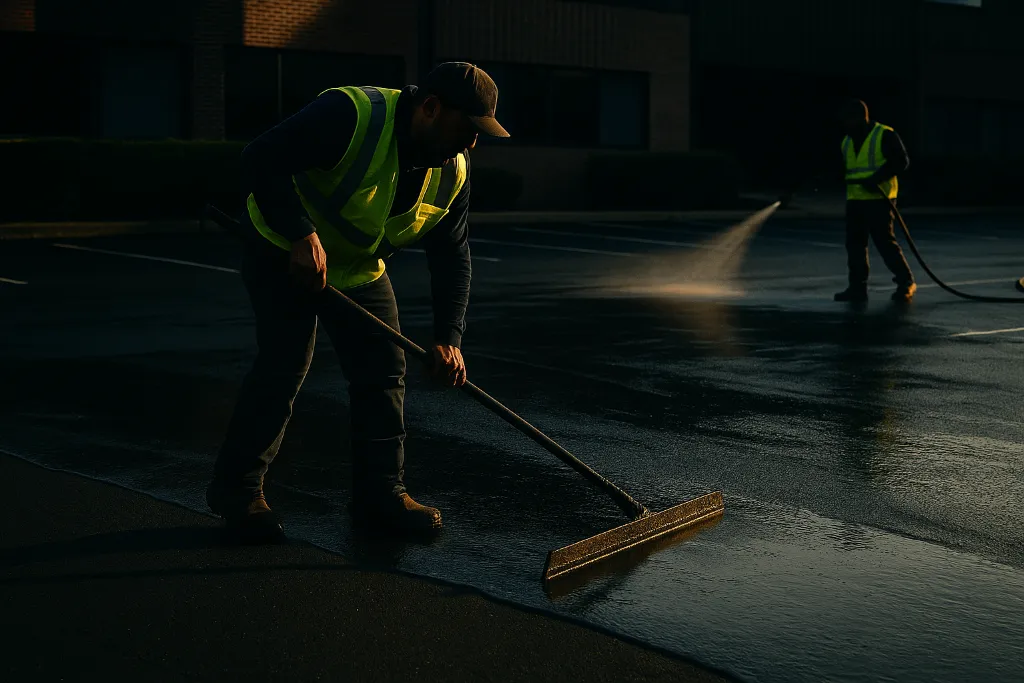
Spray-and-squeegee application at spec coverage, cut clean to every edge, phased so your lot never fully closes.
Cure & Restripe
We protect the cure, then lay down fresh striping, ADA stencils and fire lanes. And walk it with you before we leave.
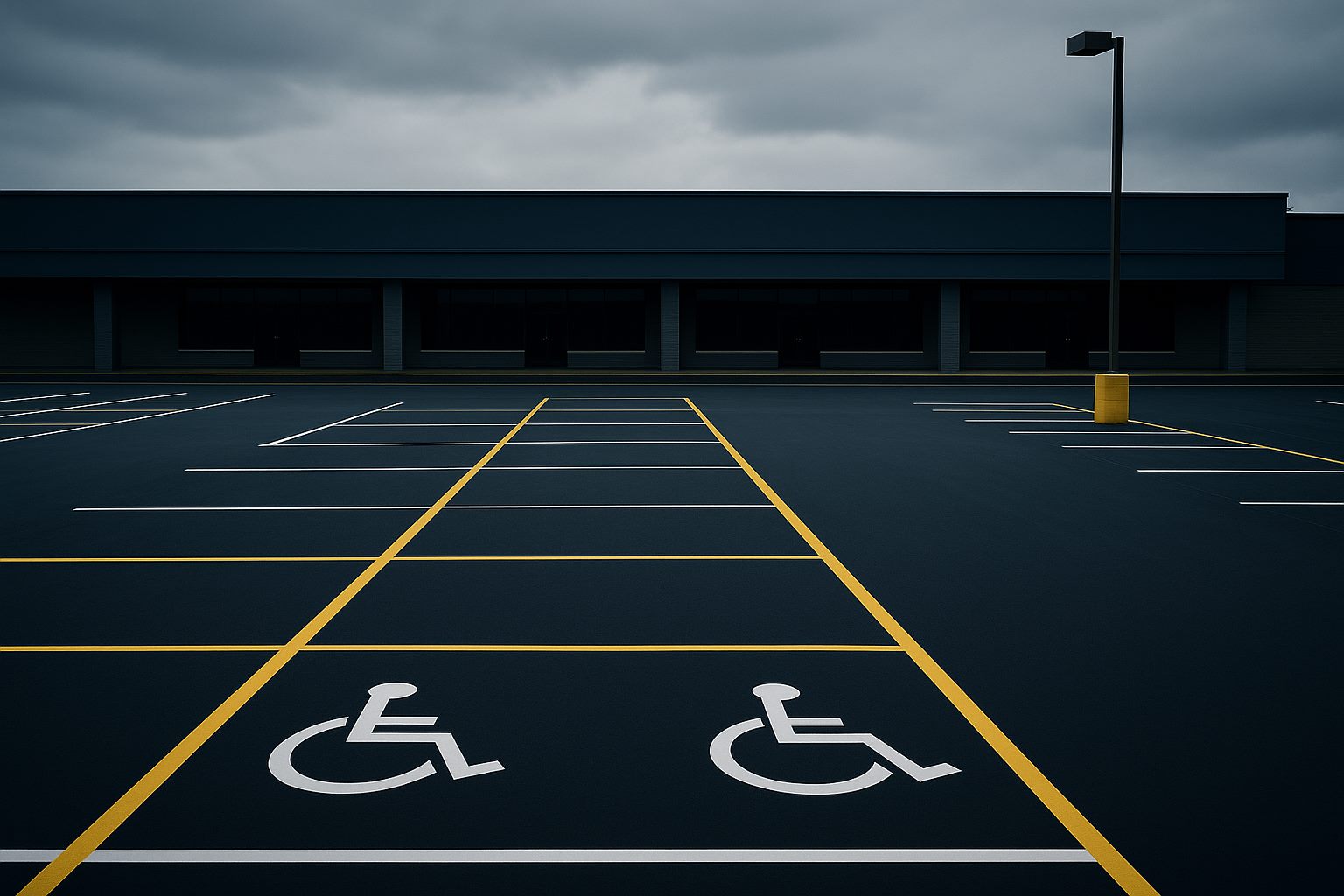
Same Lot. Drag To See The Difference.
From faded and failing to deep-black and like-new. (Representative result.)
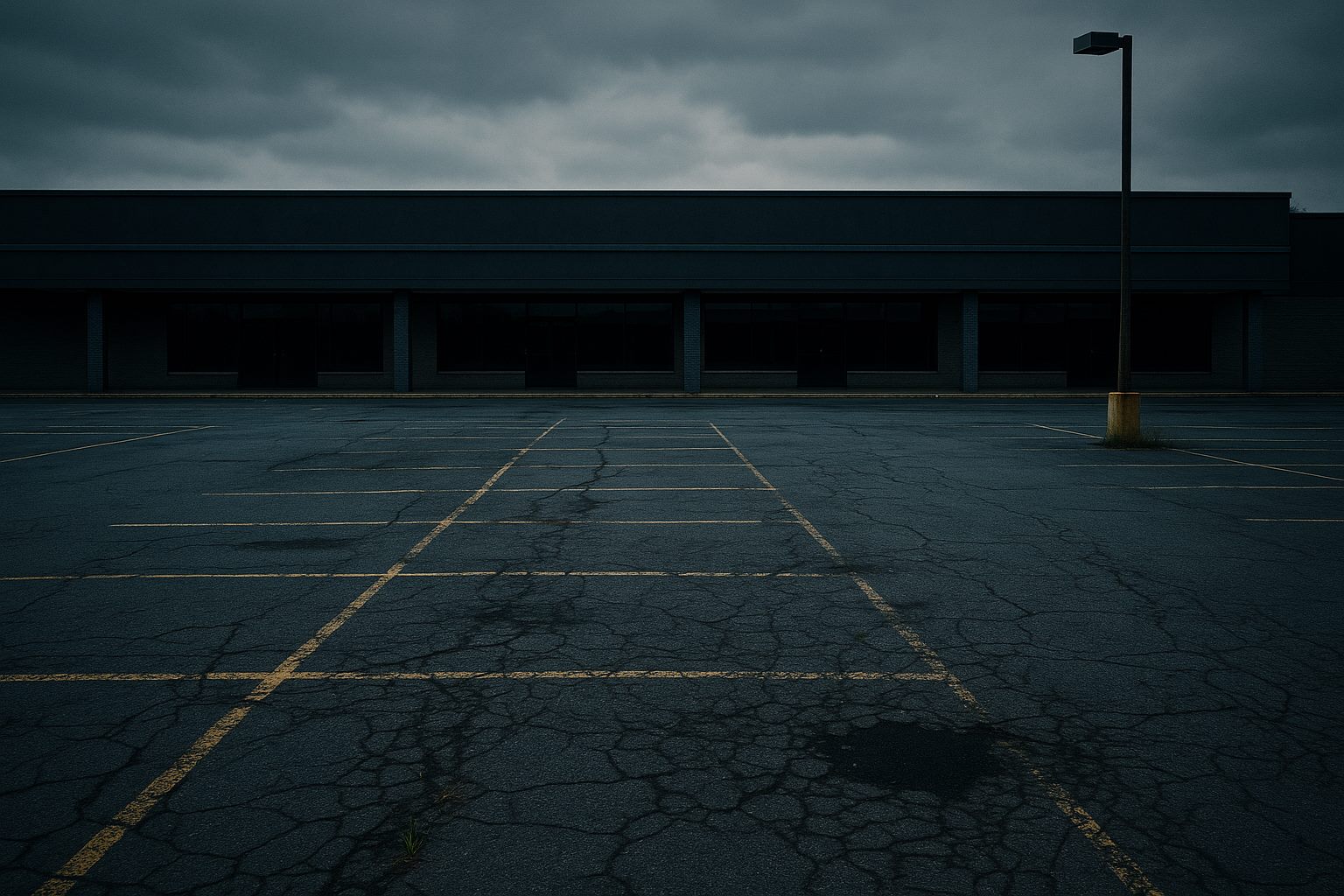
 Before
After
Before
After
How To Tell Your Lot Needs Sealcoating
- 01
The surface has gone gray
Fresh asphalt is near black. Gray means the binder has oxidized and the surface is losing its flexibility, which is the stage before it starts to ravel.
- 02
Loose grit when you brush a hand across it
That is aggregate coming out of the surface. Early raveling is the last point where sealer still solves the problem.
- 03
Water soaks in rather than beading
A sealed surface sheds water. One that absorbs it is feeding the base, and in a freeze-thaw climate that is the whole failure mechanism.
- 04
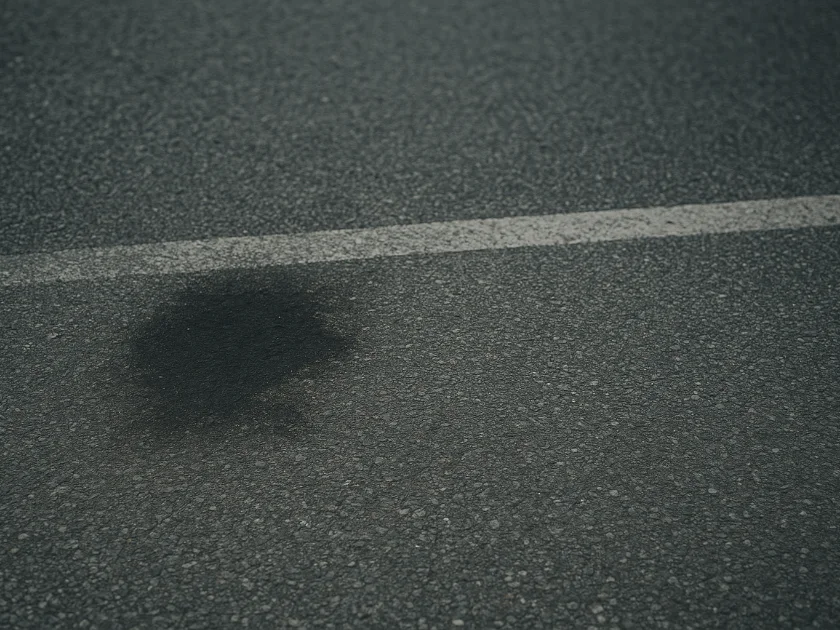
Oil stains that have gone soft or dark at the edges
Petroleum dissolves asphalt binder. A stain that is spreading is actively eating the surface and needs treating before any sealer goes down.
What drives the price
Square footage sets the baseline, but prep moves the number more than area does. A clean lot that needs a blow-down and one coat is at the bottom of the range. A lot needing oil-spot priming, vegetation killed out of the cracks, crack sealing first and two coats at the entrances can be double that for the same square footage. Sealer applied at the correct spread rate costs more per gallon covered than a thinned coat and lasts roughly twice as long, which is the single biggest difference between quotes that look far apart.
When sealcoating is the wrong answer
If the lot has alligator cracking, potholes or areas that flex underfoot, sealcoat is the wrong purchase. It will look excellent for one season and then split along every one of those lines, because sealer is a coating and the problem is structural. Those areas need full-depth repair first. We would rather tell you that at survey than take the sealcoat money and be back in a year.
What A Sealcoating Spec Should Say
Two quotes for the same lot can differ by half, and the reason is almost always in numbers neither quote prints. These are the ones to ask for.
Refined coal tar emulsion or asphalt emulsion. Coal tar holds up better against fuel and oil drips, asphalt emulsion is what most owners in the Northeast now specify, and a growing list of states and municipalities restricts coal tar outright. A quote that names neither has not specified anything.
Manufacturers publish roughly 0.12 to 0.15 gallons per square yard per coat. Water beyond the data sheet stretches the drum and shortens the life of the surface, and it is invisible once the lot is black.
Sand carried in the mix builds the wear layer and the traction. A sealer applied without it looks glossy on day one and polishes off the drive lanes inside a season.
A latex or polymer additive improves cure and abrasion resistance. It costs more per drum and shows up on the entrances, which take the most punishment.
Two coats through drive lanes and entrances, one coat across light-duty bays, is the normal commercial specification. Single-coat pricing across a whole lot is a different product than it appears to be.
Blow down to bare pavement, kill vegetation in the cracks, prime oil-soaked areas, and seal cracks first. Sealer does not bond to dirt or to petroleum.
Cut-in by hand along curbs, islands and buildings. The machine-applied field is the easy part, and the hand work is where a rushed job shows.
Standards that govern it
Pavement condition is scored under ASTM D6433, the pavement condition index practice written for roads and parking lots. It puts a 0 to 100 number on a surface using measured distress rather than opinion, and it is the reference to ask for when a contractor tells you a lot is “in good shape”.
Weather window and reopening
Sealer needs pavement above 50°F and rising, dry surface, and no rain in the following 24 hours. In New Jersey that is roughly April through October, with the shoulder weeks unreliable in both directions. Dry to touch runs 30 to 60 minutes at 70°F, and traffic stays off for 24 hours. Cool nights and high humidity stretch that, which is why the sensible schedule for a lot that cannot close is a Friday night start rather than a Tuesday.
How often, and how long it lasts
Commercial lots reseal on a two to three year cycle, with entrances and drive lanes reaching the point sooner than parking bays. New asphalt is the exception: manufacturers want it weathered for 6 to 12 months before the first coat, so the first seal on new pavement belongs in the following season.
How the work is measured
Quoted by the square foot of actual pavement, with islands and structures deducted. Preparation moves the number more than area does.
What it costs
Commercial sealcoating in this market runs roughly $0.18 to $0.36 per square foot. The bottom of that is a clean lot, one coat, minimal prep. The top is two coats through the drive lanes with oil-spot priming, vegetation killed out of the cracks and crack sealing first. A quote materially under the bottom of that range is usually a thinned coat, and it shows in the second summer.
Prices shown are typical market ranges and are subject to change. They are not a quote. Please call (917) 829-0403 for current pricing, or book the free survey and we will put an itemized number on your property.
Commercial Sealcoating By City
What we find, and what the work costs, changes by market. Each page below covers commercial sealcoating for that city’s own property mix and scheduling constraints.
New Jersey
Across the northern freight corridor: commercial sealcoating in Newark, commercial sealcoating in Jersey City, commercial sealcoating in Elizabeth, commercial sealcoating in Paterson and commercial sealcoating in Clifton.
Across the central logistics belt: commercial sealcoating in Edison and commercial sealcoating in Woodbridge.
Across the shore and Mercer County: commercial sealcoating in Toms River, commercial sealcoating in Hamilton and commercial sealcoating in Trenton.
We also cover New York City and Long Island and Eastern Pennsylvania. Call (917) 829-0403 and we will tell you whether your property sits on a route we already run.
Sealcoating FAQ
How often should a commercial lot be sealcoated?
For most Northeast commercial lots, every 2–3 years. High-traffic entrances and drive lanes wear faster than parking stalls, so we assess each lot and recommend only what it actually needs. We will not push an annual seal you do not require.
How long does the lot have to stay closed?
We phase the work so your lot never fully closes. Sealed sections typically need to cure 24 hours before traffic, so we schedule overnight and weekend work. Most lots are sealed and back open by morning.
Do you fix cracks before sealing?
Yes. Sealcoat is a surface protectant, not a filler. We hot-rubber crack-fill and patch first so the seal goes over a sound surface, sealing over open cracks just hides the problem until it gets worse.
Will you restripe after sealcoating?
Always. Fresh, high-visibility striping, ADA stencils and fire lanes are part of the job. One crew handles seal and stripe, so the lines go back down crisp and correctly laid out.
What areas do you cover?
New Jersey, the NYC metro, Long Island and Eastern Pennsylvania, under one point of contact and one invoice across your whole portfolio.
Get Your Sealcoating Quote
Free on-site assessment and an itemized quote for any commercial property in the Northeast. Built around your schedule.
Itemized quote within 48 hours · No obligation