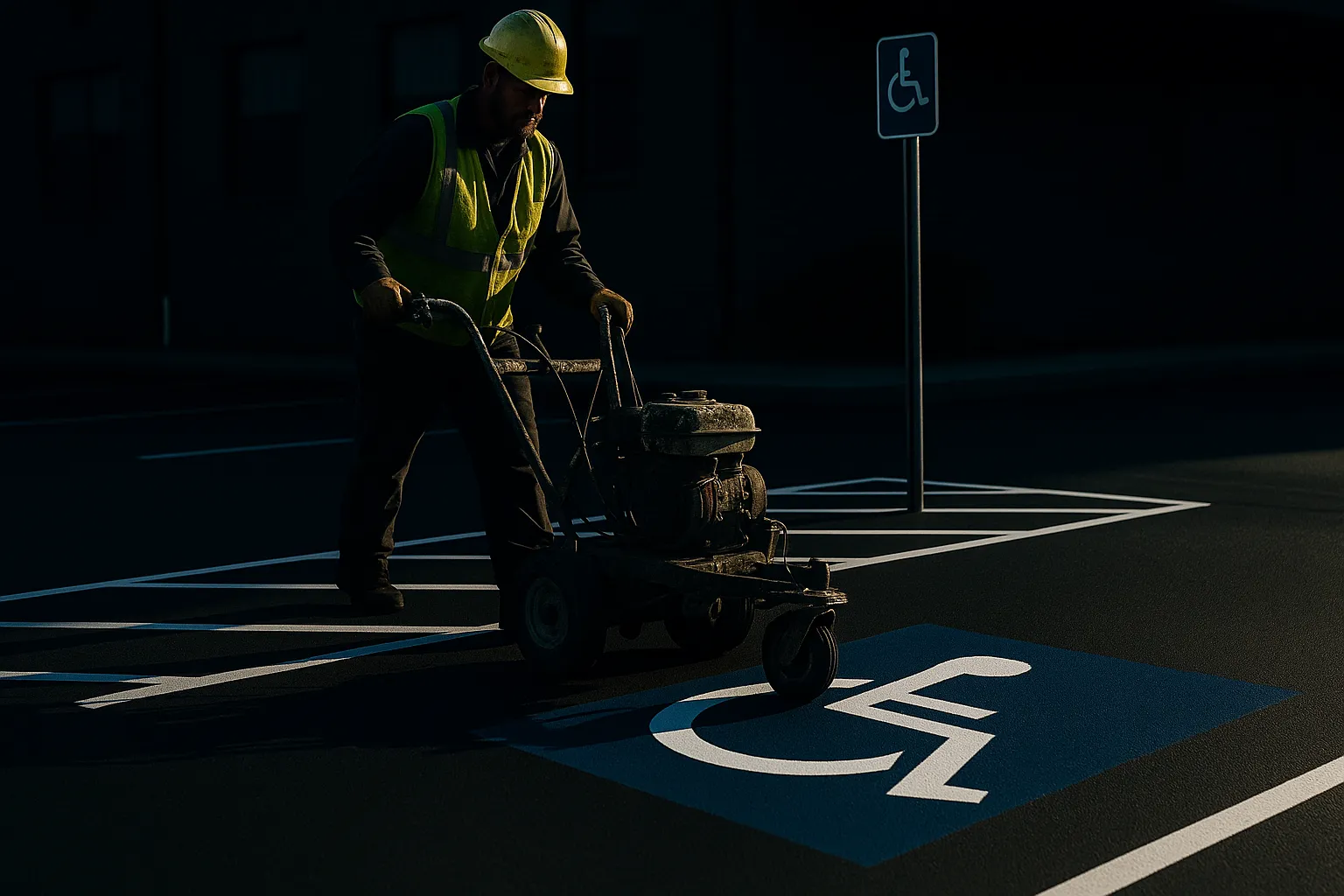
ADA Compliance
Inspection-Ready ADA Parking. Done Right, Documented, Protected.
Compliant accessible stalls, access aisles, ramps and signage that keep your property out of legal trouble and open to every customer.
Free on-site assessment · Itemized quote · No obligation
ADA Violations Are Expensive. And Easy To Trip Over.
Wrong stall counts, faded access aisles, missing signage or non-compliant slopes are exactly what inspectors and drive-by lawsuits look for. One letter can cost more than getting it right would have.
Lawsuit Exposure
Non-compliant accessible parking is a common target for ADA demand letters and costly settlements.
Failed Inspections
Wrong stall ratios, slopes or signage fail inspection and stall your certificate of occupancy.
Faded Compliance
ADA stencils and access aisles wear away, yesterday’s compliant lot is today’s violation.
Compliant Down To The Slope, Stencil and Sign
We bring accessible parking up to current ADA standards, correct number and dimensions of stalls, properly striped access aisles, compliant signage and ramp transitions. And document it so you’re covered.
Correct Stall Ratios
The right number and size of accessible and van-accessible stalls for your lot.
Access Aisles & Stencils
Properly striped access aisles and crisp accessibility symbols.
Signage & Mounting
Compliant signs at the correct height, including van-accessible designations.
Ramp & Slope Checks
We flag and correct non-compliant slopes and curb transitions.
 One crew. Start to finish.
How We Get It Done
Compliance Audit
We measure stalls, aisles, slopes and signage against current ADA standards.
Correction Plan
A clear written scope of exactly what needs to change to comply.
Bring To Standard
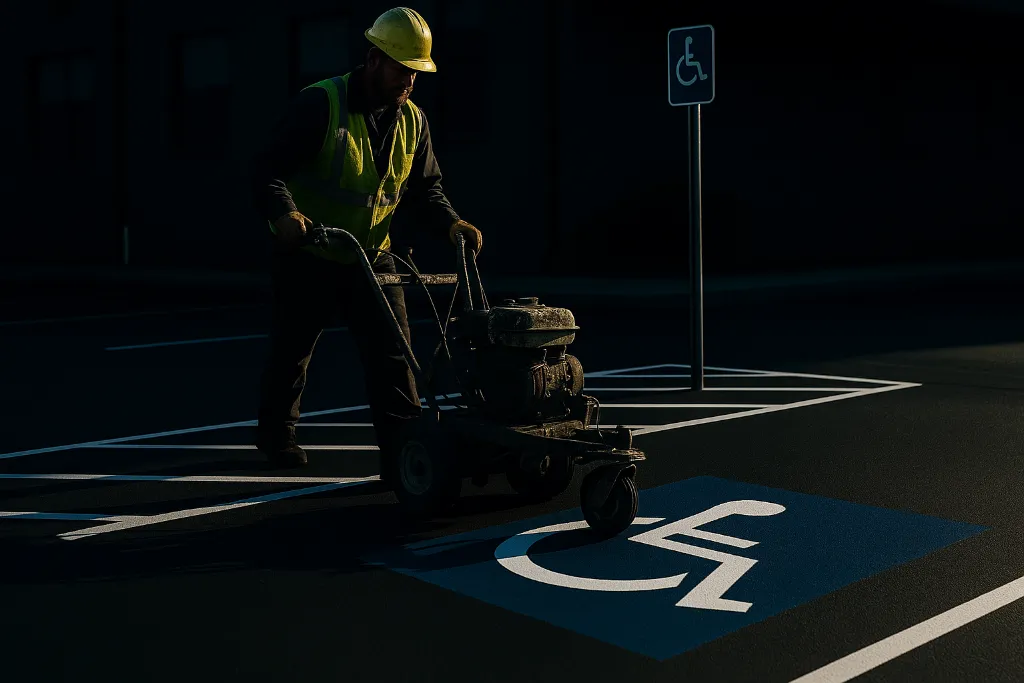
Restripe stalls and aisles, install signage and correct transitions.
Document
You get documentation of the compliant layout for your records.
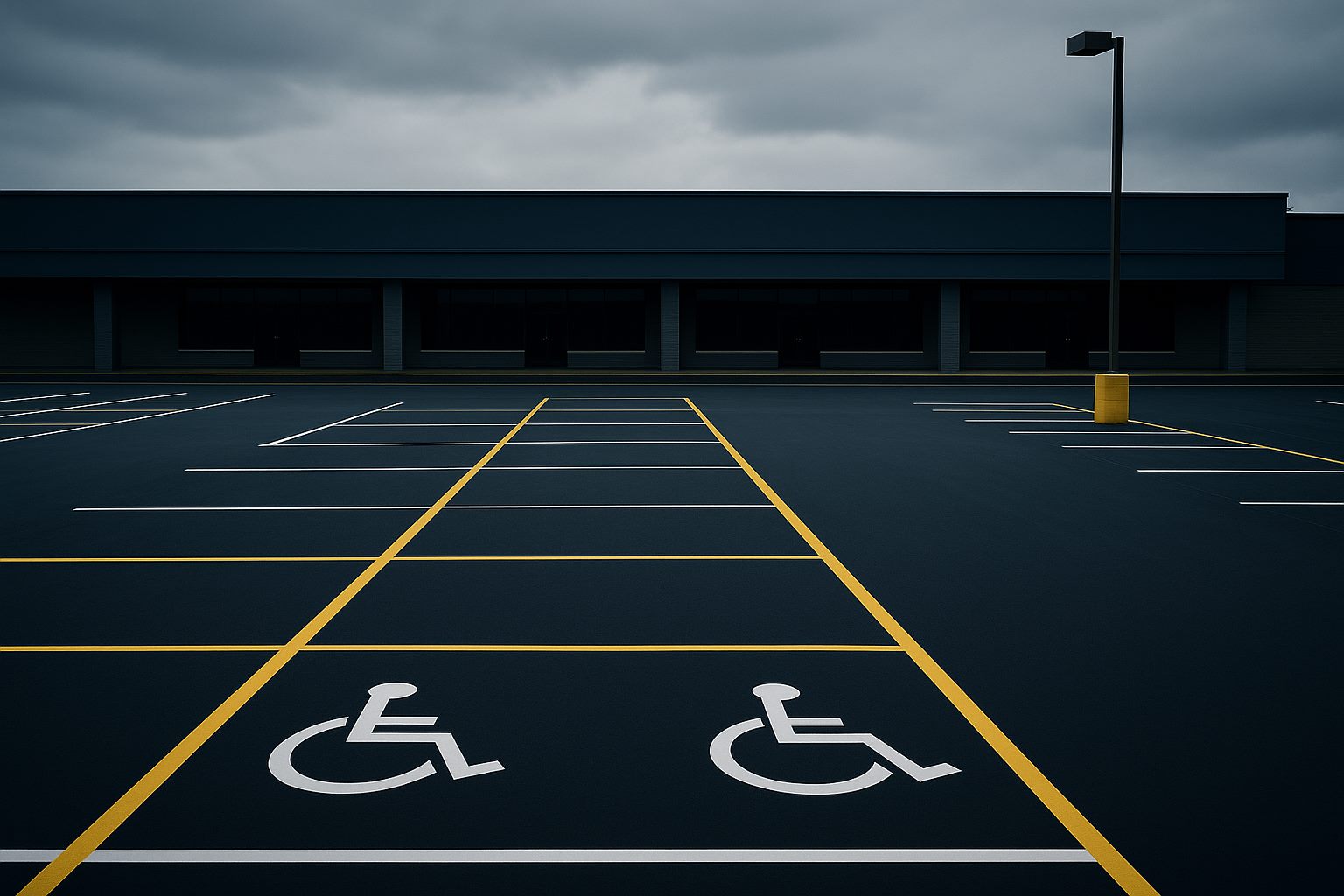
Same Lot. Drag To See The Difference.
From faded and failing to deep-black and like-new. (Representative result.)
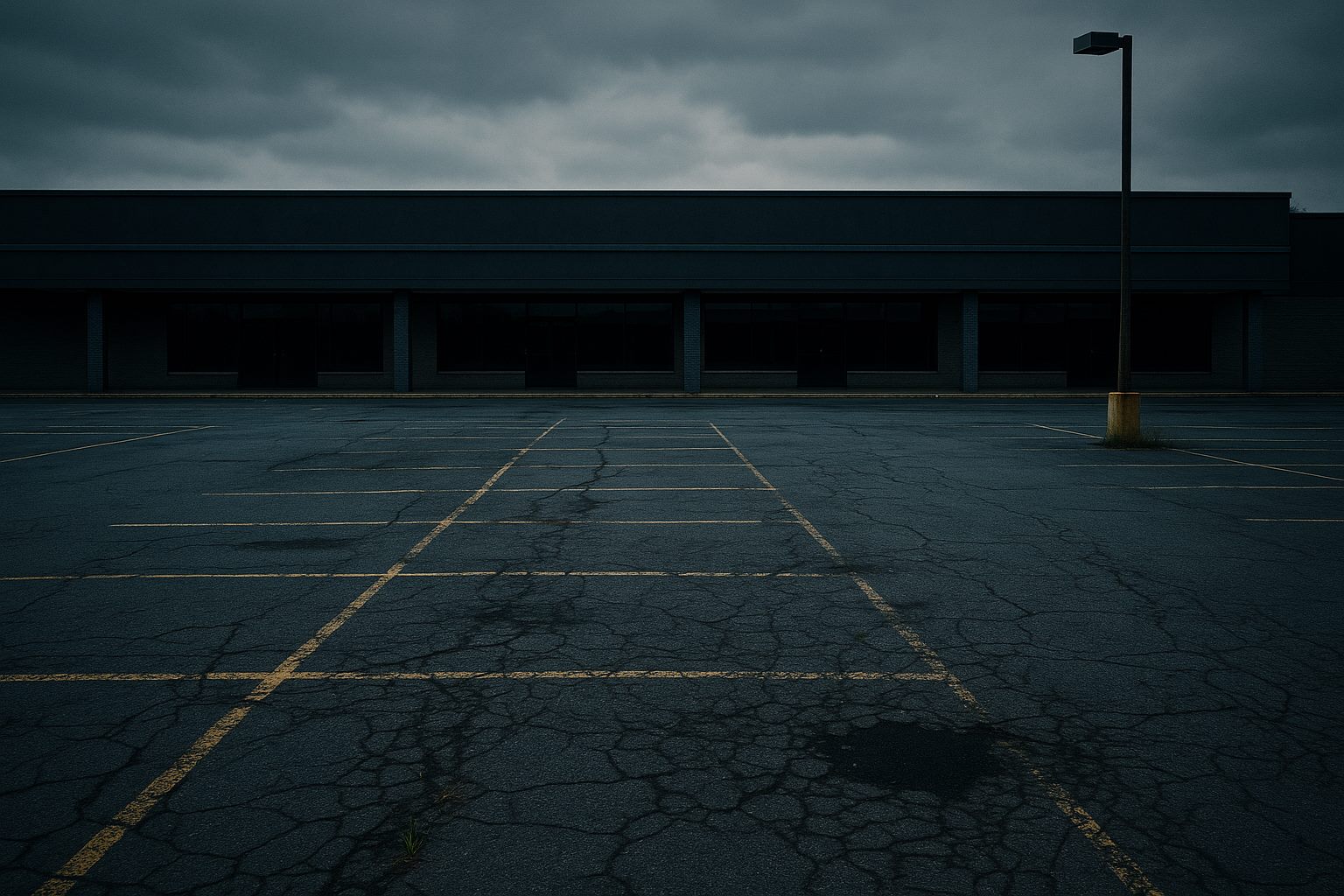
 Before
After
Before
After
How To Tell Your Lot Needs ADA Compliance
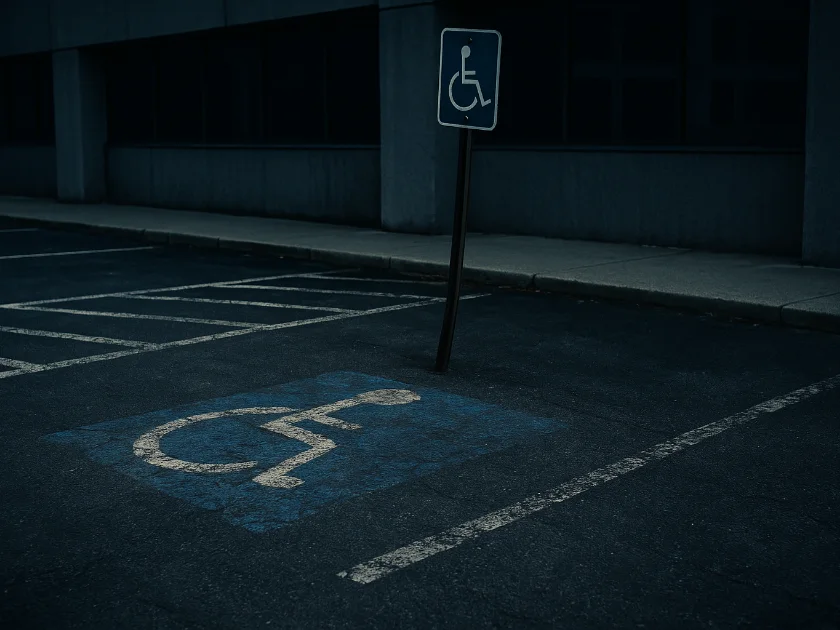
- 01
No striped access aisle beside the accessible stall
The most common single failure. The stall alone is not compliant without the aisle.
- 02
Signage missing or mounted too low
Height requirements exist so signs stay visible with a vehicle parked in the space. Cheap to correct, and routinely missed.
- 03
The route from the stall to the entrance is obstructed or steep
A compliant stall connected to a non-compliant route does not help anyone, and it is where reviews frequently land.
- 04
Faded stencils and hatching
Worn marking fails on legibility regardless of whether the underlying dimensions are correct.
What drives the price
Usually far less than owners expect, because most failures are marking and signage rather than construction. Re-striping stalls and aisles, adding hatching and installing compliant signage at the right height is a modest job on most properties. The number rises only when the pavement itself has to change: correcting a slope that exceeds the allowed cross-fall, or rebuilding a route, is a paving job with paving pricing. We survey and tell you which category you are in before quoting.
When ADA compliance is the wrong answer
There is no case where accessible parking is the wrong thing to fix. What we will tell you honestly is when the fix is bigger than striping. If the accessible stalls sit on a grade that exceeds the permitted slope, no amount of paint makes them compliant, and anyone offering to solve that with striping is selling you a document rather than a solution.
The Measurements A Compliance Review Uses
Accessible parking is one of the few things on your property with published numbers attached. A reviewer arrives with a tape measure and a level, so you may as well know what they are measuring.
Table 208.2 of the 2010 Standards sets the count: 1 accessible space for a lot of 1 to 25, 2 for 26 to 50, 3 for 51 to 75, 4 for 76 to 100, rising to 9 at 401 to 500, then 2 percent of the total from 501 to 1000.
One in every six accessible spaces has to be van accessible under 208.2.4. A lot with a single accessible space needs that space to be the van one.
A car accessible space is 96 inches wide minimum. A van space is 132 inches, or 96 inches where the access aisle beside it is also 96 inches.
60 inches wide minimum, the same length as the space it serves, marked so it reads as no-parking. Two spaces are allowed to share one aisle between them.
1:48, about 2 percent, maximum in all directions across both the space and the aisle. This is the failure that striping cannot fix, and the one owners find out about last.
A sign carrying the International Symbol of Accessibility, mounted with the bottom of the sign at least 60 inches above the ground so it stays visible over a parked vehicle. Van spaces add the van accessible designation.
98 inches minimum along the van route, at the space, and at the entrance and exit a van uses to reach it. Canopies and garage entries are where this gets missed.
A 36 inch minimum clear route from the access aisle to the entrance, with no wheel stop, curb or planter in it, and a curb ramp wherever it crosses a curb line.
Standards that govern it
The governing document is the 2010 ADA Standards for Accessible Design, enforced for commercial property under Title III of the Americans with Disabilities Act. New Jersey adds its own barrier free subcode on top of the federal standard, so a lot that satisfies the federal dimensions can still fail a state review. Nothing in either document is discretionary, and neither has a small-property exemption. Enforcement mostly arrives as a private claim rather than an inspection, and parking is among the most frequently cited items in Title III complaints because it is the part of a property anyone can measure from the sidewalk.
Weather window and reopening
Marking and signage corrections happen in a single visit, in the same weather window as any striping work: dry surface above 50°F. Slope corrections are paving work and follow paving timelines and paving season.
How often, and how long it lasts
Re-check after any repaving, re-layout or change of tenant, because all three move the entrance, the route or the count. Faded stencils fail a review on legibility even when every dimension underneath them is correct, which puts accessible marking on the same 12 to 24 month cycle as the rest of the striping.
How the work is measured
Most corrections are priced as striping and signage line items. The number only jumps when the pavement itself has to move.
What it costs
Bringing an accessible stall up to standard, marking, hatching, stencils and compliant signage, typically runs $300 to $1,500 per stall depending on what is already there and whether signage has to be supplied and set. Slope corrections are paving work and carry paving pricing. Most properties we survey are in the first category.
Prices shown are typical market ranges and are subject to change. They are not a quote. Please call (917) 829-0403 for current pricing, or book the free survey and we will put an itemized number on your property.
ADA Compliance By City
What we find, and what the work costs, changes by market. Each page below covers ADA compliance for that city’s own property mix and scheduling constraints.
New Jersey
Across the northern freight corridor: ADA compliance in Newark, ADA compliance in Jersey City, ADA compliance in Elizabeth, ADA compliance in Paterson and ADA compliance in Clifton.
Across the central logistics belt: ADA compliance in Edison and ADA compliance in Woodbridge.
Across the shore and Mercer County: ADA compliance in Toms River, ADA compliance in Hamilton and ADA compliance in Trenton.
We also cover New York City and Long Island and Eastern Pennsylvania. Call (917) 829-0403 and we will tell you whether your property sits on a route we already run.
ADA Compliance FAQ
How many accessible spaces does my lot need?
It scales with total stall count, for example, a lot with 1–25 spaces needs at least one accessible stall, and the ratio increases from there, with a set share being van-accessible. We calculate the exact requirement for your lot during the audit.
What makes an accessible stall non-compliant?
Common issues are a missing or too-narrow access aisle, faded or wrong stencils, signage at the wrong height or missing van designation, and slopes that exceed the allowed grade. We check all of them.
Can you fix slope and ramp issues too?
We identify non-compliant slopes and curb transitions and correct what’s correctable through striping, layout and minor work; where structural grading is required, we’ll scope that clearly.
Will I get documentation for compliance?
Yes. We document the compliant layout so you have records on file for inspectors, ownership or counsel.
What areas do you serve?
New Jersey, the NYC metro, Long Island and Eastern Pennsylvania, under one point of contact.
Get Your ADA Compliance Quote
Free on-site assessment and an itemized quote for any commercial property in the Northeast. Built around your schedule.
Itemized quote within 48 hours · No obligation