Commercial Parking Lot Maintenance in Newark, NJ
Newark carries more heavy-freight traffic than any other city in New Jersey, between Port Newark, the Newark Liberty air-cargo district and the warehouse belt feeding both.
Free on-site assessment · Itemized quote · No obligation
Why Newark Lots Fail At The Edges First
Container chassis and loaded box trucks put axle loads on Newark lots that retail pavement was never built for. The damage seldom starts in the middle. It starts at the entrance apron, the dock approach and the turning radius where a tractor pivots under load, then spreads as water gets into the broken edge.
So we spec Newark work around those failure points: heavier base repair at the approaches, and hot-applied crack sealing on the drive lanes at a tighter interval than an inland retail lot would need.
Every Service Your Newark Lot Needs, One Vendor
We cover commercial sealcoating, commercial line striping, asphalt crack repair, asphalt paving & patching, ADA compliance, graffiti removal, commercial power washing, electric gate repair and parking lift removal across distribution warehouses, freight terminals, medical campuses around University Hospital, the Ironbound retail strip, and office lots near Penn Station. One crew, one schedule, one invoice, so you are not sourcing a separate contractor for the striping and the gate.
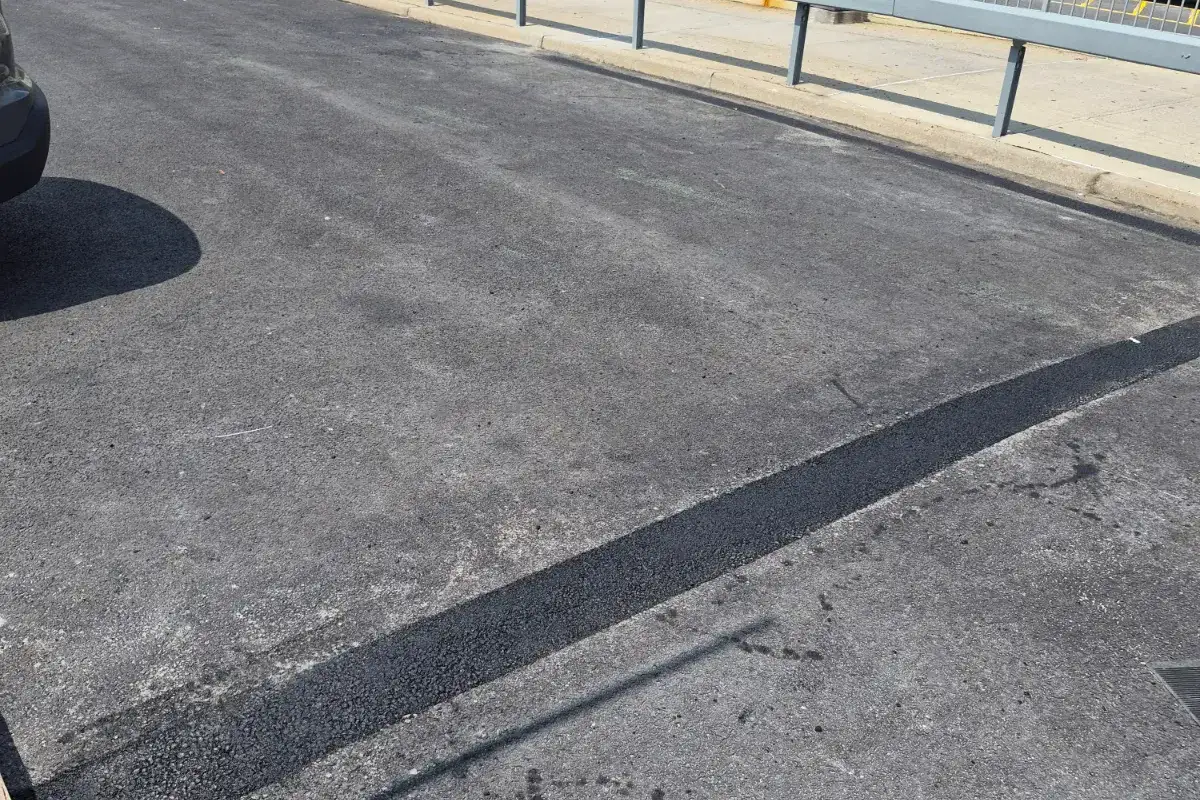
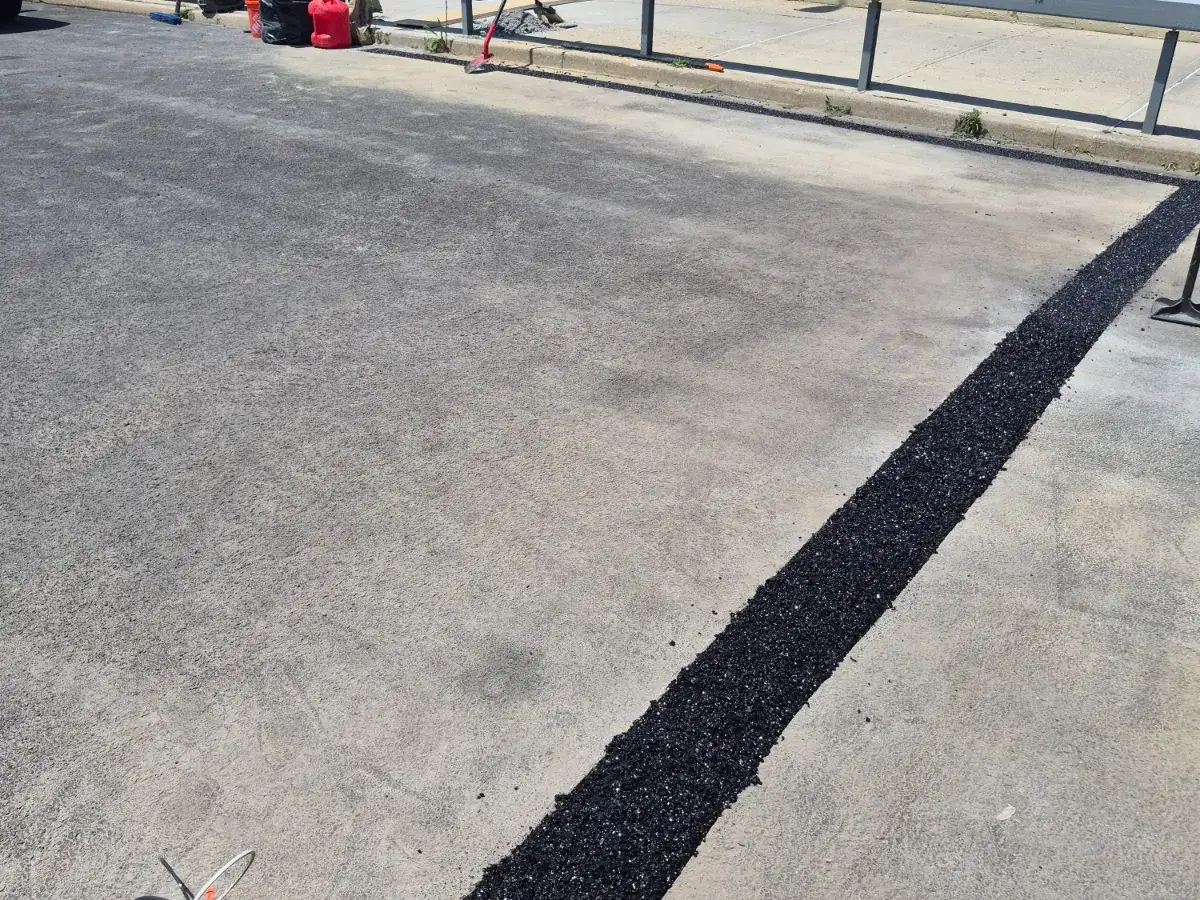
What Newark properties call us for most is asphalt crack repair, for the reason above.
 Asphalt Crack Repair in Newark
What We Check First On A Newark Lot
On a Newark freight or warehouse lot we walk it in this order, because this is the order it fails in.
The entrance apron and every dock approach
This is where a loaded chassis concentrates its weight and where we expect to find the first structural break. We probe for base failure rather than judging by the surface, because an apron can look intact and be hollow underneath.
Turning radii
We look for shoving and rippling where tractors pivot under load. Shoving means the asphalt is moving laterally, which no surface treatment fixes.
The yard low point
Standing water plus heavy axle loads destroys a base far faster than either alone. If the lot does not drain, we price the drainage before anything else.
The crack pattern
We map whether cracks follow old patch seams or form fresh under load. That single distinction decides whether you need sealing or reconstruction, and it is where most quotes get it wrong.
You get the findings in writing with the quote, itemized, including anything we think does not need doing. If your Newark lot is sound we would rather tell you that and see you again in two years.
The Newark Lots We Work Around
Our Newark work covers distribution warehouses, freight terminals, medical campuses around University Hospital, the Ironbound retail strip, and office lots near Penn Station. Here is what the places around those lots do to the pavement, and to when we can work on it.
Prudential Center
Event nights fill the surface lots and garages for blocks around the arena. Lot work near it is booked against the arena calendar, because a coned-off row on a game night is lost revenue for the owner.
Newark Penn Station
Commuter and office lots around the station fill before 7am and stay full until evening. Resurfacing and striping here happen overnight or on weekends, a section at a time.
Ironbound district
Lots behind the Ferry Street restaurants and shops are small and boxed in by rowhouses, with one narrow way in. We bring smaller equipment and plan around deliveries that start early.
Doremus Avenue freight route
This is the truck spine for the port-side industrial yards. Loaded chassis rut the yard approaches and turning areas off it first, so those get heavier base repair than the rest of the lot.
McCarter Highway (Route 21)
Traffic along the Passaic riverfront does not let up long enough to close a curbside entrance by day. Entrance work on lots off McCarter is done overnight with one lane kept open.
Broad St & Market St (Four Corners)
Downtown office garages and lots cluster around this crossing. Staging on the street here needs city approval, so we plan equipment drop-off and permits before quoting a start date.
McCarter Hwy & Raymond Blvd
One of the busiest crossings near Penn Station. Lots with an exit onto it see constant stop-start traffic at the apron, which is where the surface wears through first.
Newark loading docks seldom stop, so most of our work here happens in phased night windows. We close a quadrant, turn it around before the first shift, then move to the next.
Serving the Greater Newark Area
Crews working Newark cover the surrounding municipalities on the same routes, so a property a few minutes outside the city line is quoted and scheduled the same way.
If your town is not named here, call (917) 829-0403 and we will tell you right away whether you are on a route we already run.
What A Newark Lot Costs To Keep
The three line items that matter most on a port and freight property here, with the interval each one runs on and what that work typically costs in this market.
Asphalt Crack Repair
Seal cracks every year or two, at $0.90 to $3.00 per linear foot depending on whether they are routed.
Commercial Sealcoating
Reseal every two to three years, quoted by the square foot at roughly $0.18 to $0.36.
ADA Compliance
Re-check after any repaving, re-layout or change of tenant. Corrections run $300 to $1,500 per accessible stall.
Held to that cycle, a commercial lot runs twenty-five years or more before it needs rebuilding. Left alone, most need structural repair inside eight, and by then the repair is the whole surface rather than the corner that failed first. That is the difference between a maintenance line and a capital project.
Prices shown are typical market ranges and are subject to change. They are not a quote. Please call (917) 829-0403 for current pricing, or book the free survey and we will put an itemized number on your property.
What Newark Property Managers Ask Us
Can you work around an active loading dock in Newark?
Yes, and it is most of what we do here. We phase Newark freight and warehouse lots one quadrant at a time, usually overnight, so docks stay live and no trailer gets boxed in. On a typical terminal we stage the work across several nights instead of closing the yard for a day.
Our Newark lot is rutted where the trucks turn. Is that a sealcoat job?
No. Rutting and edge break at a turning radius is a structural failure in the base. Sealcoat over it will look right for one season and then split along the same lines. That area needs full-depth patching first. We will tell you which parts of the lot are structural and which are a surface job.
Do you handle the Port Newark truck-route approaches?
We maintain the private lots, yards and access drives of businesses along the freight routes, not the public roadway. If your property fronts Doremus Avenue or the port approaches, the apron where your drive meets the road is usually the first thing we look at.
What drives the cost on a Newark freight lot?
Three things, in order: how much of the failure is structural rather than surface, how much of the work has to happen at night around live docks, and how thick the base needs to be for the axle loads you actually run. A yard taking container chassis is a different build from a yard taking box trucks, and we price it that way. We will not quote a number before walking it, because on freight pavement the sight-unseen guess is always wrong in one direction or the other.
How quickly can you get a crew to Newark?
Newark is our closest market, so survey within a few days and a crew on site inside two weeks is normal for planned work. A failed apron or a safety hazard blocking dock access gets pulled forward, because that is costing you throughput every shift it stays broken.
Get Your Newark Quote
Free on-site assessment and an itemized quote for any commercial property in Newark, New Jersey.
Free on-site assessment · Itemized quote · No obligation