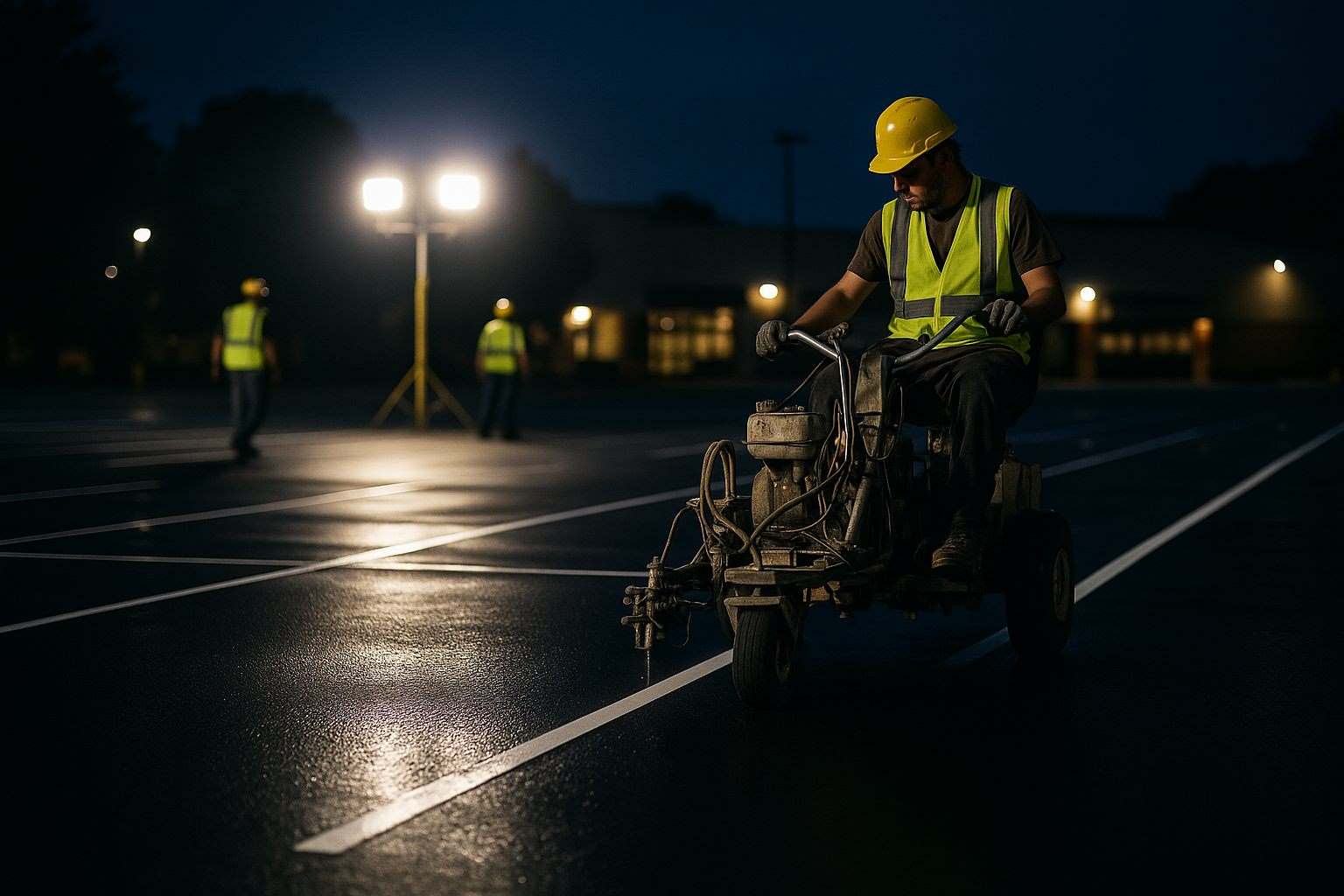
Everything Your Parking Lot Needs, From One Vendor
Eight services, one crew, one invoice. More useful than the list: the order they belong in, and how to tell which ones your property actually needs.
Free on-site assessment · Itemized quote · No obligation
The Order Matters More Than The List
Pavement work runs in a sequence, and doing it out of order wastes money in a way that is invisible for about a season. Anything structural comes first, because the layers under the asphalt carry the load and no surface product substitutes for them. Surface protection comes second, once there is something sound to protect. Markings come last, because sealcoat covers them.
That sequence is why we survey before we quote. A lot that looks uniformly tired is usually one small failed area and a large sound area, and those want completely different work. The services below are grouped in the order they belong in rather than by price.
Eight Services, In Sequence
In the order the work belongs in, not by price. The number on each photograph is its place in that sequence, and the label above each name is the stage it belongs to.
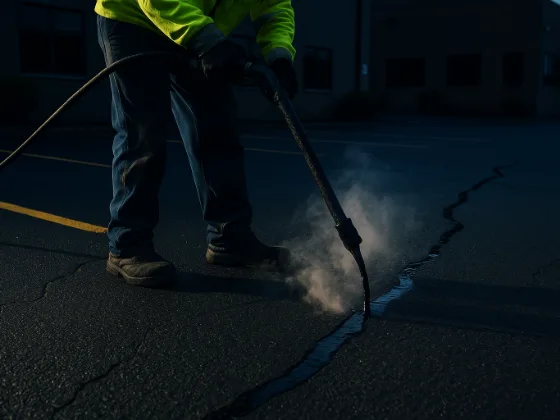 01
01Asphalt Crack Repair
As soon as a crack is wide enough to take water.
Learn more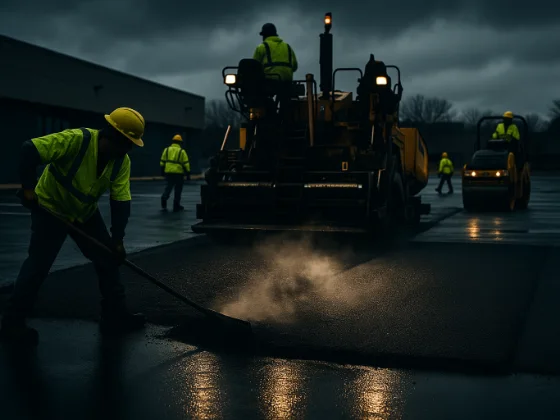 02
02Asphalt Paving & Patching
When the base has failed, not just the surface.
Learn more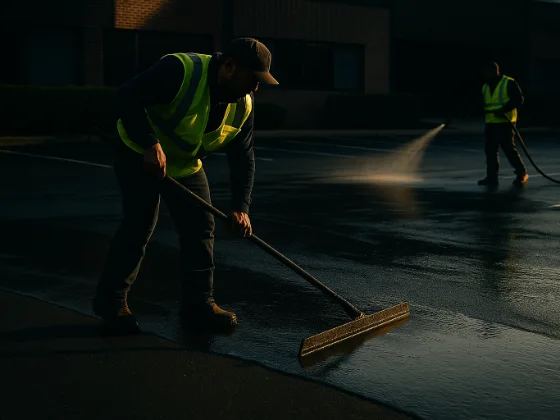 03
03Commercial Sealcoating
Every two to three years on a sound lot.
Learn more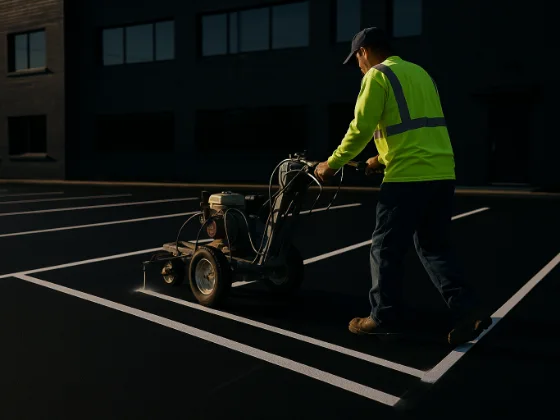 04
04Commercial Line Striping
After any sealcoat, and whenever the layout stops being obvious.
Learn more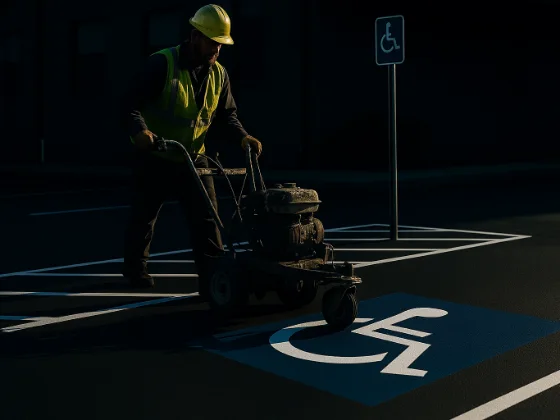 05
05ADA Compliance
Before someone else raises it.
Learn more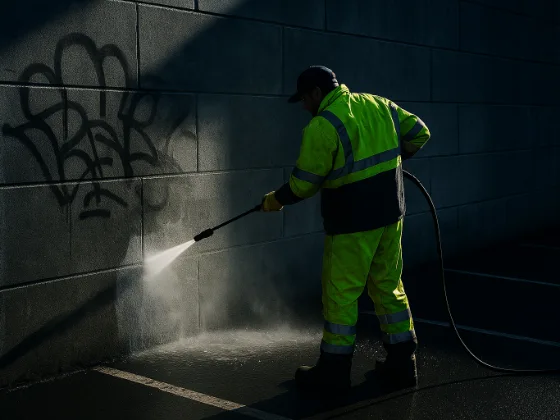 06
06Graffiti Removal
Within days, not weeks.
Learn more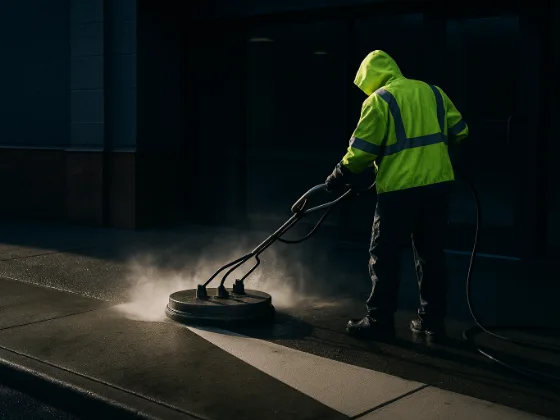 07
07Commercial Power Washing
Annually on customer-facing frontage.
Learn more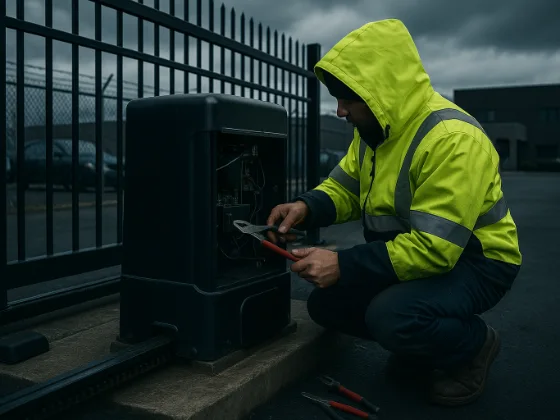 08
08Electric Gate Repair
The day it stops working.
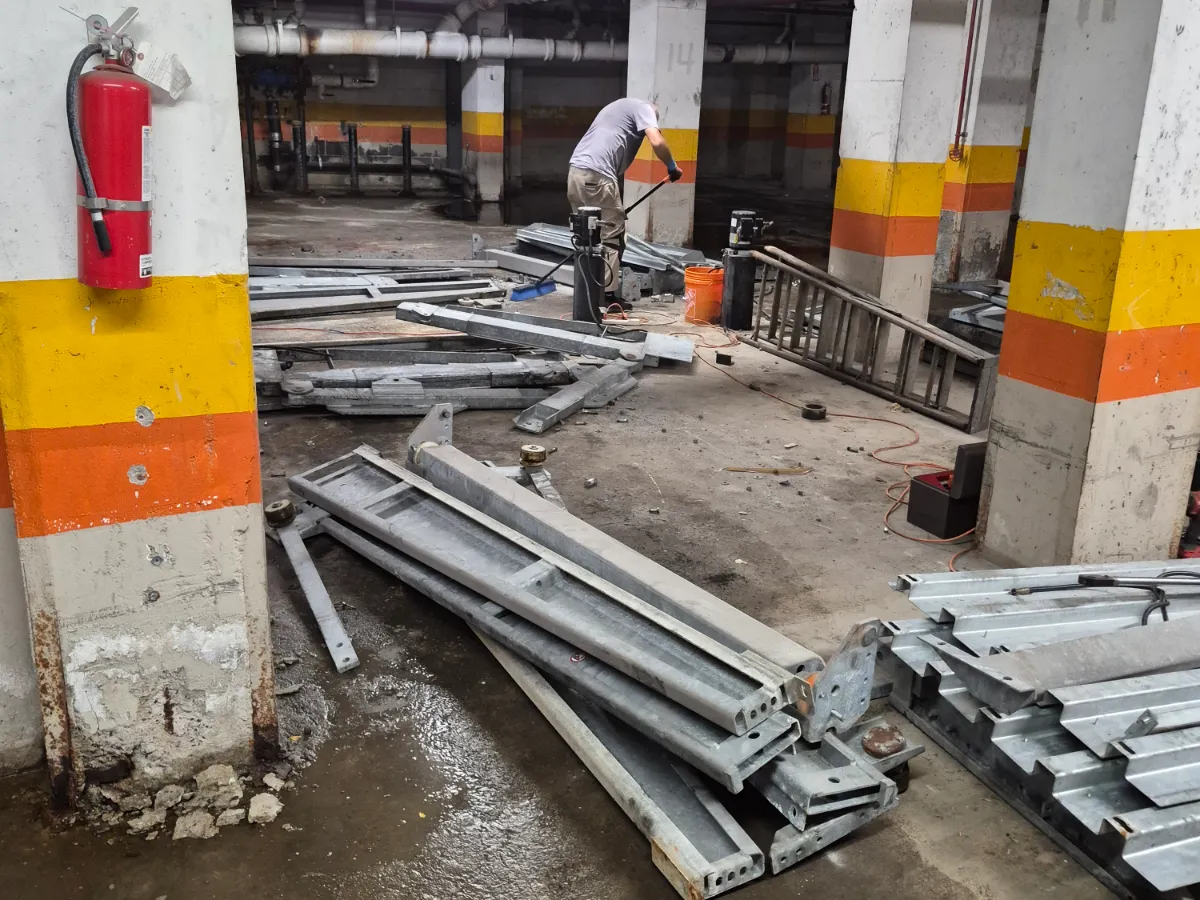
Learn moreParking Lift Removal
Once the system is out of service for good.
Learn moreWhat Your Property Type Changes About The Work
The same eight services get specified differently depending on what the property does. Load, hours, and who walks across the lot decide the pavement section, the phasing and the order of work.
Shopping centers and strip retail
Customer parking is the first thing a shopper judges, and the lot is shared by delivery trucks that load the corners far harder than the cars do. Phasing matters more here than anywhere.
Warehouse and distribution
Trailer aprons, dock approaches and turning areas carry axle loads that break down a car-park section. These sites usually need a heavier pavement section in a few defined areas rather than a stronger lot overall.
Medical offices and urgent care
The accessible route and the drop-off get the closest scrutiny of any property type, and the patient who cannot cross the lot safely is the one who calls someone. Work happens outside clinic hours.
Apartments, condominiums and HOA properties
Residents park overnight, so the lot never fully empties. Sealcoating and striping here are a phasing exercise agreed with the board or the manager before a date goes on the calendar.
Industrial and manufacturing
Fuel and hydraulic drips soften asphalt binder locally. Spot treatment and the right sealer matter more than total area.
Self-storage
Long drive aisles, constant slow turning, and box trucks pivoting at unit doors. Wear concentrates at the turns rather than spreading evenly.
Restaurants and drive-thru
The drive-thru lane takes the same wheel path thousands of times a week. Rutting and worn markings show up there years before the rest of the lot needs anything.
Hotels and hospitality
Guests arrive at night, and the lot is judged under lighting. Reflective markings and clean pavement do more for a property review than most owners expect.
Car dealerships
Display areas need appearance-grade surfaces, and the service drive needs load capacity. They are two different specifications on one property.
Houses of worship
Almost all traffic lands in a few hours a week, which makes scheduling straightforward and makes the parking capacity question sharper.
Schools, campuses and municipal sites
Bus loops, pedestrian crossings, drop-off lines and public accessibility scrutiny. Summer is the only realistic window on most of them.
Fuel stations and convenience stores
Constant fuel and oil contact in the same square yards every day, plus canopy columns and tanker turning paths. The failures are chemical as much as structural.
Office parks
Predictable weekday load, empty weekends, and a tenant base that notices the entrance. The easiest properties to schedule and the ones most often left too long.
Everything Else Between The Curb And The Building
A parking lot is more than its asphalt, and the pieces bolted to it fail on their own schedule.
Comes with the pavement work
Fire lane markings and legends
Painted to the width and wording your fire official expects, and kept legible.
Wheel stops and their marking
Reset, replaced or removed where one sits in an accessible route.
Speed bumps and speed tables
Painted and marked so they are visible before a driver reaches them.
Bollards and pipe guards
Repainted with the rest of the site so they read as protection rather than clutter.
Curbs, curb lines and concrete walks
Repaired and repainted where they meet the pavement work.
Dumpster pads
The heaviest-loaded 200 square feet on most properties, and usually the first to fail.
Stall numbering, hatching and directional arrows
Laid out with the plan rather than added afterwards.
Accessible stalls, aisles, stencils and signage
Set out to the 2010 Standards dimensions above.
Flagged on the survey, not fixed by us
The survey covers the whole property, including the parts outside our scope. You get them photographed and listed, because several of them will damage the pavement we are about to work on.
Traffic control while we work
Cones, barricades, signed detours and, on busy sites, a flagger. Planned with the phasing rather than improvised on the day, because how vehicles move around the closed section is the part that generates complaints.
Catch basins and storm inlets
A collapsing inlet ring undermines the pavement around it. We photograph it and tell you, because sealing over a failing basin wastes the sealer.
Pole bases and lighting
Cracked bases and rusted anchor bolts get flagged on the survey report.
EV charging stalls
Where a lot is getting chargers, the striping plan and the accessible route both change, and it is cheaper to know that before the striping goes down.
Snow storage areas
Where a plow operator piles snow decides where the meltwater goes. We mark the areas that are taking the damage.
Signage and posts
Bent, faded or missing regulatory signs get listed with the marking work they relate to.
What A Maintenance Program Actually Looks Like
A commercial lot that gets a crack seal every year or two and a sealcoat every two to three will run twenty-five years or more before it needs rebuilding. The same lot left alone typically needs structural repair inside eight, and by then the repair is the whole surface rather than the corner that failed first.
The difference between those two outcomes is a few thousand a year against a capital project. It is also the entire argument for putting a property on a schedule instead of calling someone when a pothole appears, and it is why we would rather sell you a survey that concludes your lot is fine than a resurface you did not need.
 One crew. Every trade.
What Property Managers Ask Before Booking
In what order should this work be done?
Structural first, then surface, then markings. Full-depth repair and crack sealing come before sealcoat, because sealer over a failing base splits along the same lines within a season. Striping comes last, because sealcoating covers it. A contractor who quotes you sealcoat on a lot with structural failure is either not surveying or not telling you.
Do we need every service on this list?
Almost certainly not, and we will say which ones you do not need. A typical commercial property runs a crack-seal and sealcoat cycle with striping refreshed alongside, and touches paving only when something has actually failed. The value of one vendor is not that you buy everything, it is that the survey covers everything and you get one honest recommendation instead of four quotes each arguing for its own trade.
How often does a commercial lot need attention?
On a sound lot: crack sealing annually or every other year, sealcoat every two to three, striping on the same cycle or slightly more often. Heavy freight, coastal salt exposure and highway-adjacent entrances all shorten those intervals. A survey gives you the intervals for your property rather than the averages.
Can you handle multiple properties on one contract?
Yes, and that is most of what we do. We survey a portfolio once, rank the properties by urgency, and give you a multi-year schedule and budget on a single invoice cycle. Property managers running sites across several towns get one point of contact rather than a vendor per location.
What happens if you find something worse than expected?
We stop and tell you before doing the work, with what we found and what it changes. You get a revised number and the choice. What we do not do is discover extra work mid-job and present it as a completed line item on the invoice.
Find Out What Your Lot Actually Needs
A free on-site assessment and an itemized quote, including the parts we think you can leave alone.
Free on-site assessment · Itemized quote · No obligation