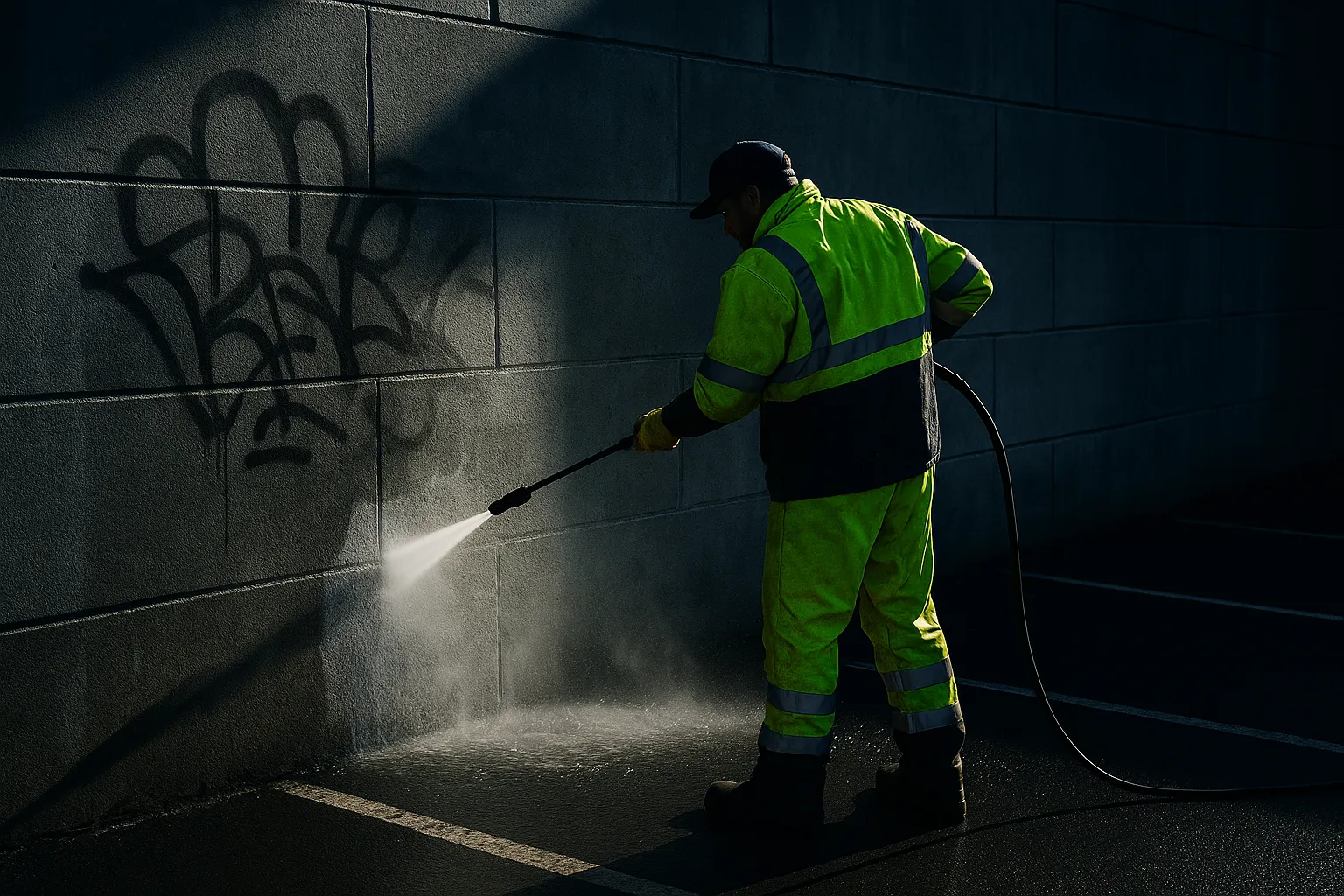
Graffiti Removal
Graffiti Gone Fast, Before Your Tenants Even Notice.
Rapid-response removal that gets tags off walls, curbs and surfaces fast, restoring your property’s image and stopping the cycle of repeat vandalism.
Free on-site assessment · Itemized quote · No obligation
Graffiti Left Up Is An Invitation For More.
A fresh tag signals neglect. And the longer it stays, the more it attracts. It rattles tenants, deters customers, and multiplies. Speed is everything: remove it fast and the problem usually doesn’t come back.
Broken-Windows Effect
Visible graffiti signals nobody’s watching. And invites more tagging and vandalism.
Tenant & Customer Trust
Tagged walls make tenants feel unsafe and send shoppers to a cleaner competitor.
It Spreads
One tag becomes ten. Rapid removal breaks the cycle before it takes hold.
The Right Removal Method For Every Surface
Brick, concrete, metal, painted block, glass, each surface needs a different approach. We match the method to the material so the tag comes off without damaging what’s underneath, and we respond fast.
Rapid Response
We prioritize graffiti so it’s gone before it draws copycats.
Surface-Matched Methods
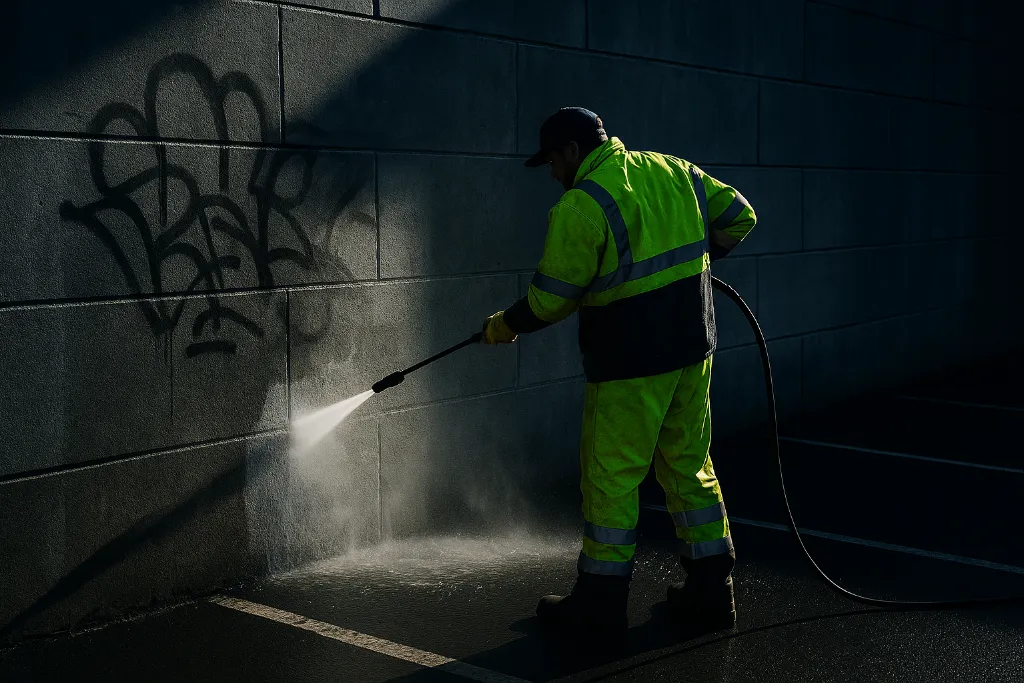
Pressure washing, chemical removal or paint-over matched to the material.
Color-Matched Paint-Over
Where removal isn’t clean, we paint-match so the wall looks untouched.
Recurring Programs
Ongoing watch-and-remove plans for properties that get hit repeatedly.
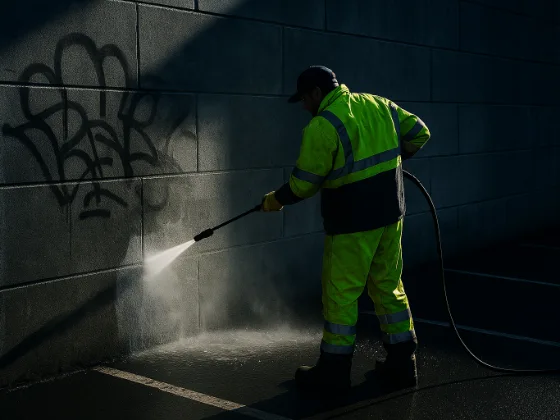 One crew. Start to finish.
How We Get It Done
Assess The Surface
We identify the material and the right removal method to avoid damage.
Remove Or Cover
Pressure wash, chemical-strip or color-matched paint-over as appropriate.
Restore
The surface is returned to its original look, clean, uniform, untouched.
Prevent
Optional anti-graffiti coatings and recurring removal to stop repeat hits.
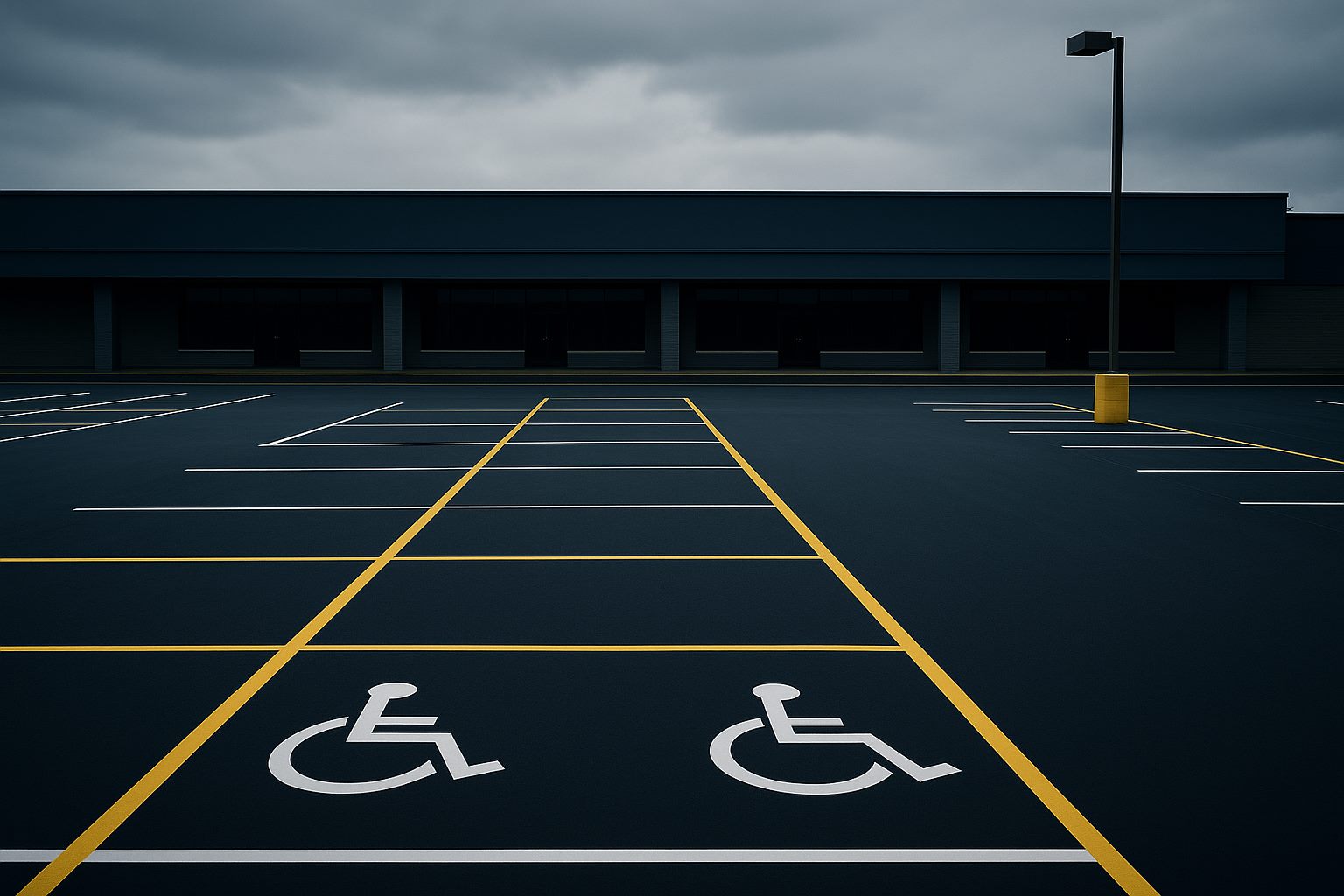
Same Lot. Drag To See The Difference.
From faded and failing to deep-black and like-new. (Representative result.)
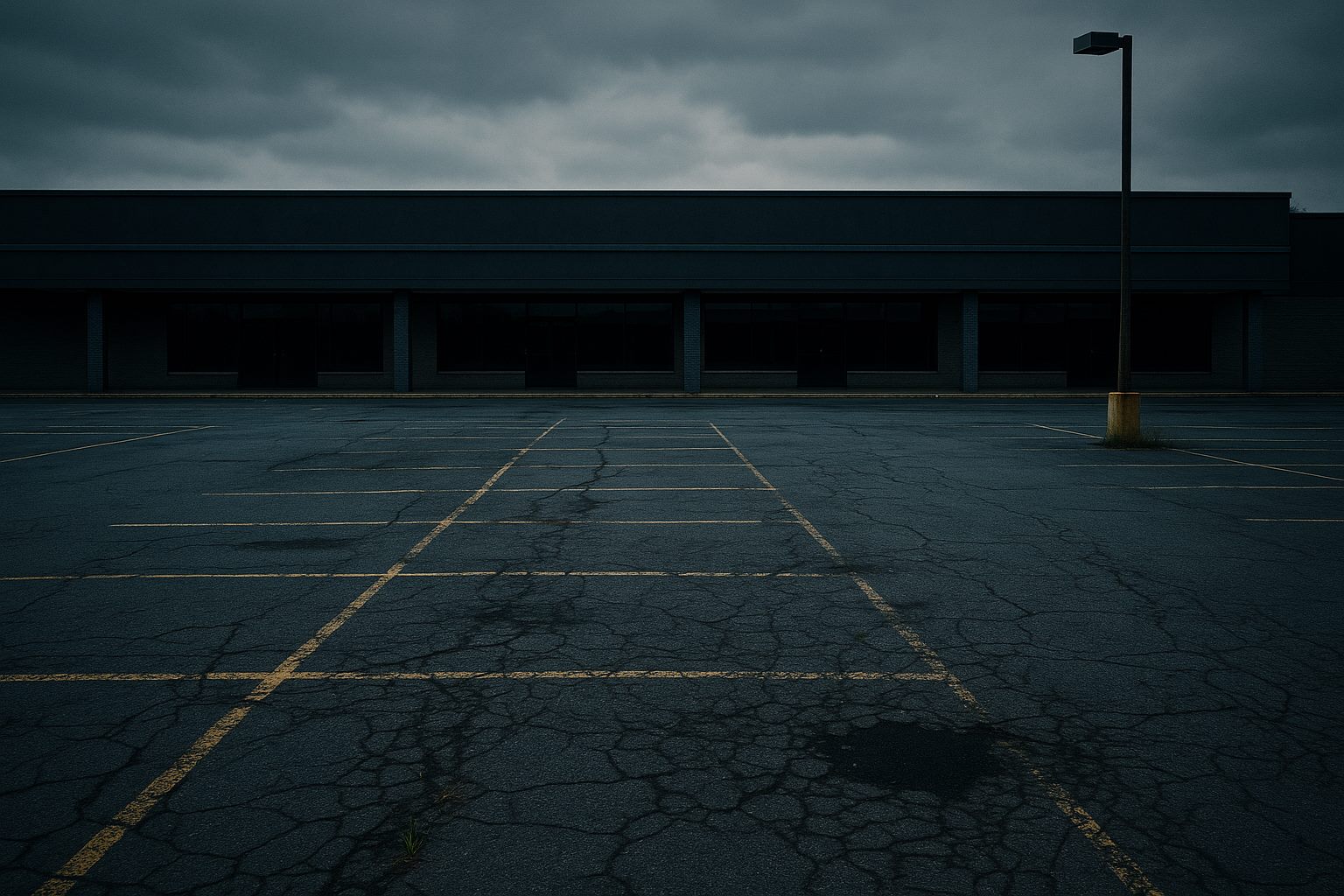
 Before
After
Before
After
How To Tell Your Lot Needs Graffiti Removal
- 01
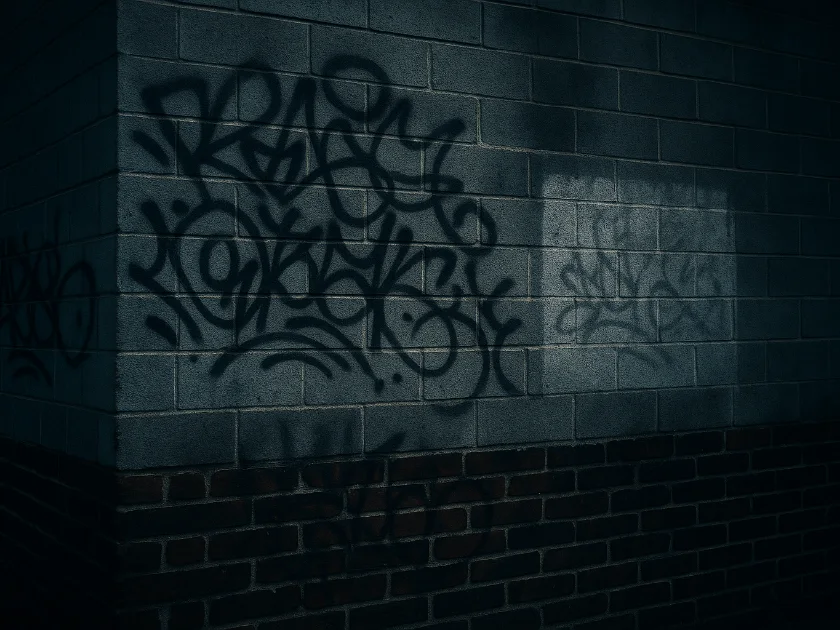
Tags on street-facing walls, signage or roll-up doors
Visible tagging attracts more of it. The single biggest factor in whether a property gets tagged repeatedly is how fast the first one comes off.
- 02
Shadowing where a previous removal was done badly
Aggressive removal can etch the substrate and leave a permanent ghost, which then gets tagged again because it already looks damaged.
- 03
Tagging on porous masonry or historic brick
Porous surfaces absorb the pigment and need a different method entirely. Pressure alone drives it deeper.
- 04
Repeat hits in the same spot
A pattern means the location is being used, and an anti-graffiti coating usually pays for itself faster than repeated removals.
What drives the price
Driven by substrate and by age. Fresh paint on a sealed surface lifts easily and is the cheap case. Aged tagging on porous brick or concrete needs poultice methods and time, which costs more. Size matters less than people expect; getting set up on site is a significant share of a small job. Where tagging repeats, an anti-graffiti coating applied after removal changes the economics, because subsequent hits wash off rather than needing a removal visit.
When graffiti removal is the wrong answer
On porous historic masonry, aggressive removal can do more damage than the tag. In those cases the right answer is a gentler method accepting some shadowing, or a sacrificial coating going forward. We will say so rather than blast a facade clean and leave you with etching that cannot be undone.
Method Follows Substrate
Every decision in graffiti removal comes from what the tag is sitting on. Get that wrong and the removal does more damage than the tag did.
Coated metal, roll-up doors, painted CMU and finished concrete release with a solvent gel and low-pressure hot water. These are the easy cases and they should be quick.
Unsealed brick, block, limestone and older concrete absorb pigment. They need a poultice that draws the pigment back out over time. Pressure alone drives it deeper and etches the face.
Masonry work stays under roughly 1,500 to 2,000 psi. Above that you are cutting the surface, and the etched patch becomes the thing people see.
Sodium bicarbonate and other soft media lift pigment where water pressure would damage the substrate. Slower, gentler, and the right call on a facade you cannot replace.
Sometimes the honest answer is matching paint carried to a control joint or a natural break. It looks intentional. A patch of fresh color in the middle of a weathered wall does not.
A ghost left after removal. It comes from pigment that reached deep into a porous surface, or from a previous aggressive removal. Repeat targets are usually surfaces that already show one.
Sacrificial coatings are wax-based and come off with the tag, then get reapplied. Permanent urethane coatings survive repeated cleanings. On a wall that gets hit more than twice a year, either one changes the arithmetic.
Removal runoff is not supposed to enter a storm inlet. Containment and recovery is part of the job on any site with drainage into a municipal system.
Standards that govern it
There is no single code for graffiti removal, and two things do govern it: the substrate manufacturer’s cleaning limits, and municipal stormwater rules on what may reach a storm drain. Some New Jersey municipalities also set a removal deadline for property owners once a tag is reported.
Weather window and reopening
Fresh tagging comes off far more easily than aged tagging, and the removal window that matters is the first 24 to 48 hours. Solvent and poultice methods need surface temperatures above freezing, and poultices need dwell time measured in hours rather than minutes.
How often, and how long it lasts
Driven by the location rather than a schedule. A wall that gets hit repeatedly is telling you it needs a coating rather than another visit, because the coating turns each subsequent hit into a wash-down.
How the work is measured
Priced by visit and substrate rather than area. Getting a crew and containment onto the site is a large share of a small job, which is why several tags handled in one visit cost far less than the same tags handled one at a time.
What it costs
Removal typically runs $1 to $3 per square foot on sealed and painted surfaces, and $3 to $10 on porous masonry or aged tagging that needs poultice work. Small jobs carry a minimum, because getting a crew and containment onto the site is most of the cost. Several tags cleared in one visit cost far less than the same tags one at a time.
Prices shown are typical market ranges and are subject to change. They are not a quote. Please call (917) 829-0403 for current pricing, or book the free survey and we will put an itemized number on your property.
Graffiti Removal By City
What we find, and what the work costs, changes by market. Each page below covers graffiti removal for that city’s own property mix and scheduling constraints.
New Jersey
Across the northern freight corridor: graffiti removal in Newark, graffiti removal in Jersey City, graffiti removal in Elizabeth, graffiti removal in Paterson and graffiti removal in Clifton.
Across the central logistics belt: graffiti removal in Edison and graffiti removal in Woodbridge.
Across the shore and Mercer County: graffiti removal in Toms River, graffiti removal in Hamilton and graffiti removal in Trenton.
We also cover New York City and Long Island and Eastern Pennsylvania. Call (917) 829-0403 and we will tell you whether your property sits on a route we already run.
Graffiti Removal FAQ
How fast can you remove graffiti?
We treat graffiti as rapid-response work because speed prevents copycats. For commercial accounts in our service area we move quickly, often within a day or two of the report, sooner on recurring programs.
Will removal damage my wall?
Not when the method matches the material. We assess the surface first and choose pressure washing, chemical removal or a color-matched paint-over so the wall is restored without damage.
What if the graffiti won’t fully wash off?
On porous or stained surfaces we use a color-matched paint-over so the area looks uniform and untouched rather than leaving a ghost of the tag.
Can you prevent repeat graffiti?
Yes. We offer anti-graffiti protective coatings that make future removal easier, plus recurring watch-and-remove programs for properties that get tagged often.
What areas do you serve?
New Jersey, the NYC metro, Long Island and Eastern Pennsylvania, on one invoice across your properties.
Get Your Graffiti Removal Quote
Free on-site assessment and an itemized quote for any commercial property in the Northeast. Built around your schedule.
Itemized quote within 48 hours · No obligation