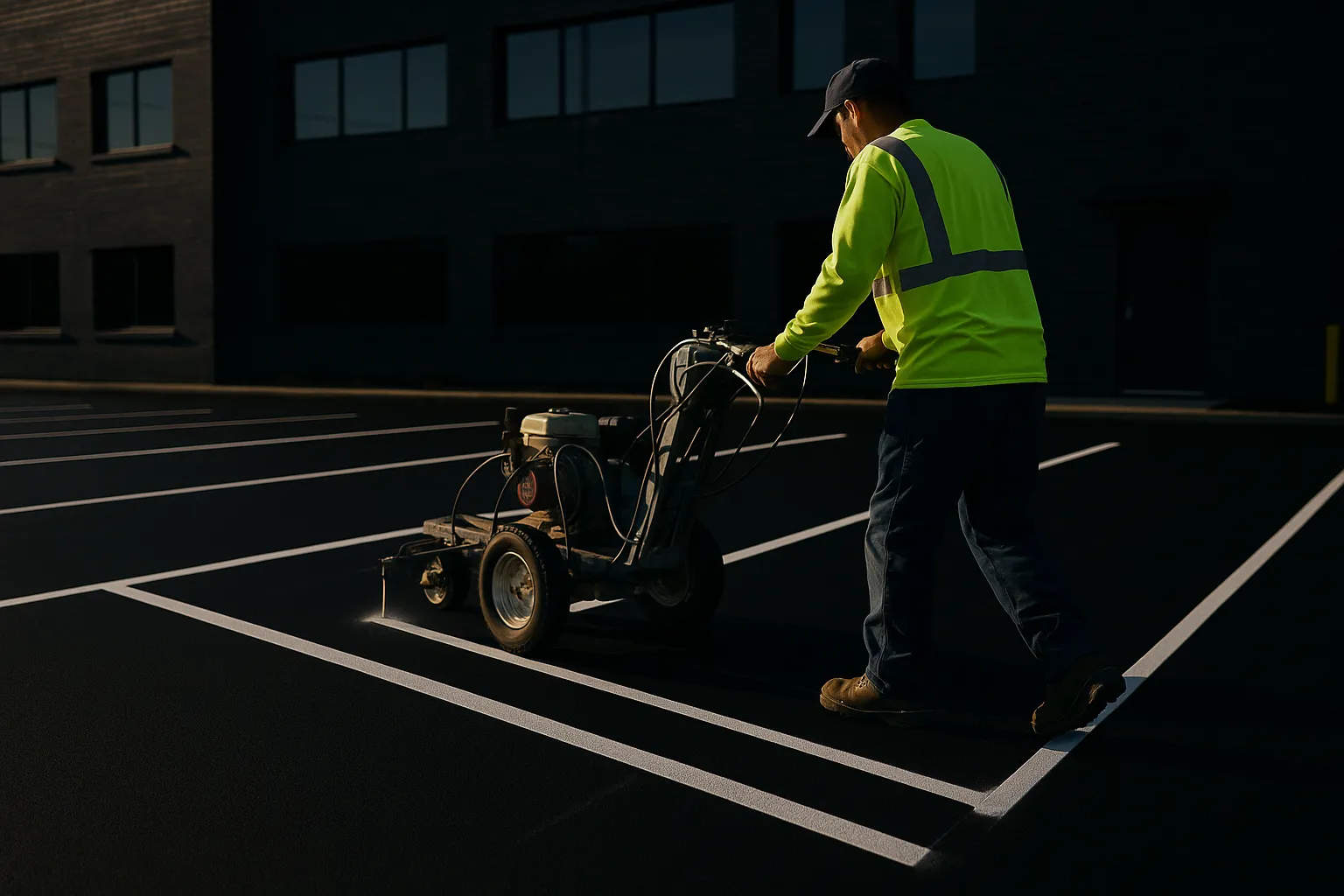
Commercial Line Striping
Crisp, High-Visibility Striping, Restriped Overnight, Open By Morning.
Fresh parking stalls, fire lanes, arrows and ADA stencils laid down fast and laser-straight. So your lot looks sharp, parks more cars, and reopens on schedule.
Free on-site assessment · Itemized quote · No obligation
Faded Lines Cost You Cars, Safety and Curb Appeal.
Worn-off striping confuses drivers, wastes spaces, invites fender-benders and fails inspections. A clean, correctly-laid-out lot parks more vehicles and tells customers you run a tight operation.
Lost Capacity
Faded or poorly spaced stalls waste square footage. You lose parking spaces, and revenue, to lines nobody can see.
Safety & Liability
Missing fire lanes, stop bars and directional arrows create accident and code-violation risk that lands on the property manager.
Tired First Impression
Ghosted lines make the whole property look neglected before a customer ever walks inside.
Laser-Straight Lines, Laid Out To Maximize Your Lot
We don’t just repaint what was there. We lay out the lot to fit more cars safely and meet code, then apply high-durability traffic paint that stays bright through Northeast winters.
Optimized Layout
We re-stripe to maximize stall count while meeting ADA and fire-code spacing.
High-Durability Paint
Commercial traffic paint and thermoplastic options that hold color and resist wear.
Full Markings
Stalls, fire lanes, arrows, stop bars, numbering and custom stencils, all in one visit.
Overnight Turnaround
We stripe at night or in phases so the lot is dry, lined and open by morning.
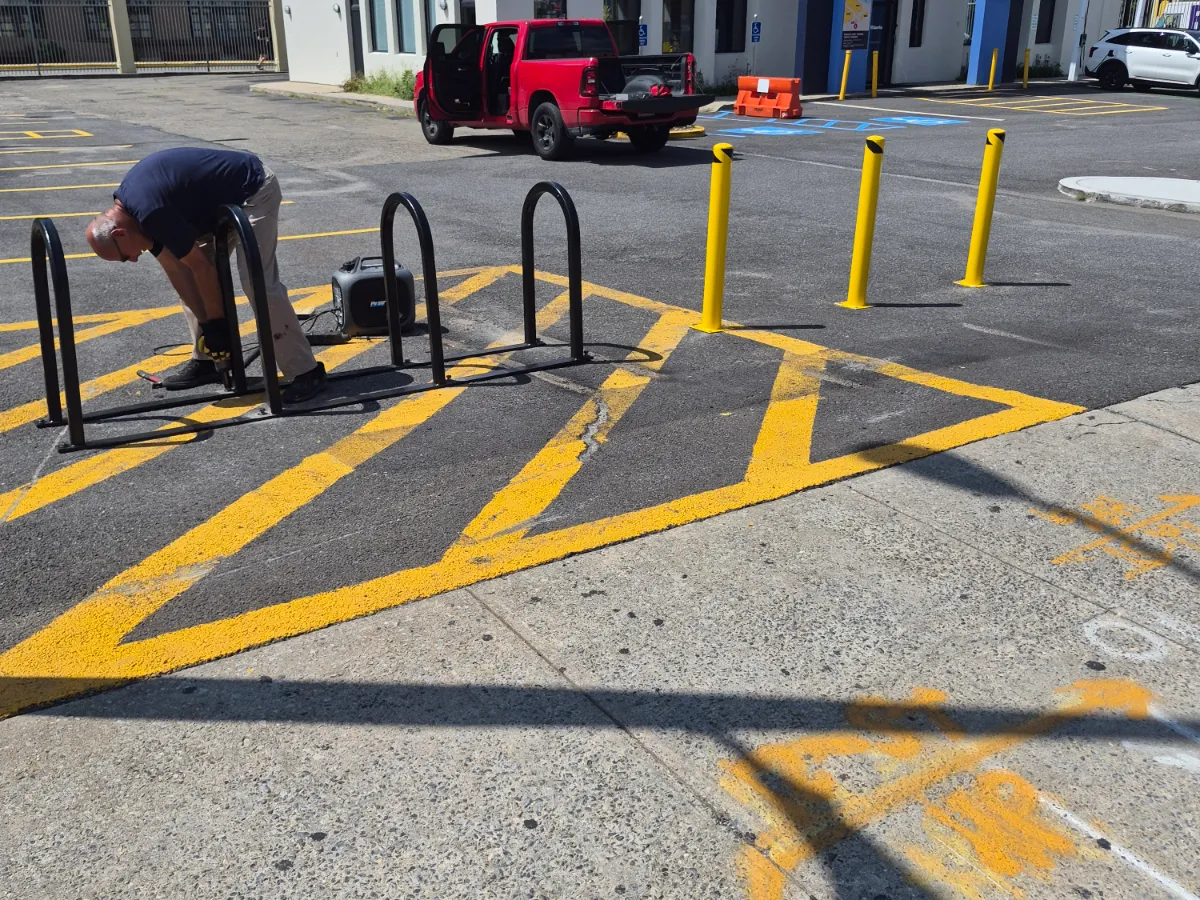 One crew. Start to finish.
How We Get It Done
Layout & Measure
We assess flow, count and code requirements, then chalk the optimal layout.
Surface Prep
Clean and dry the surface, mask edges, and remove old conflicting lines where needed.
Apply Markings
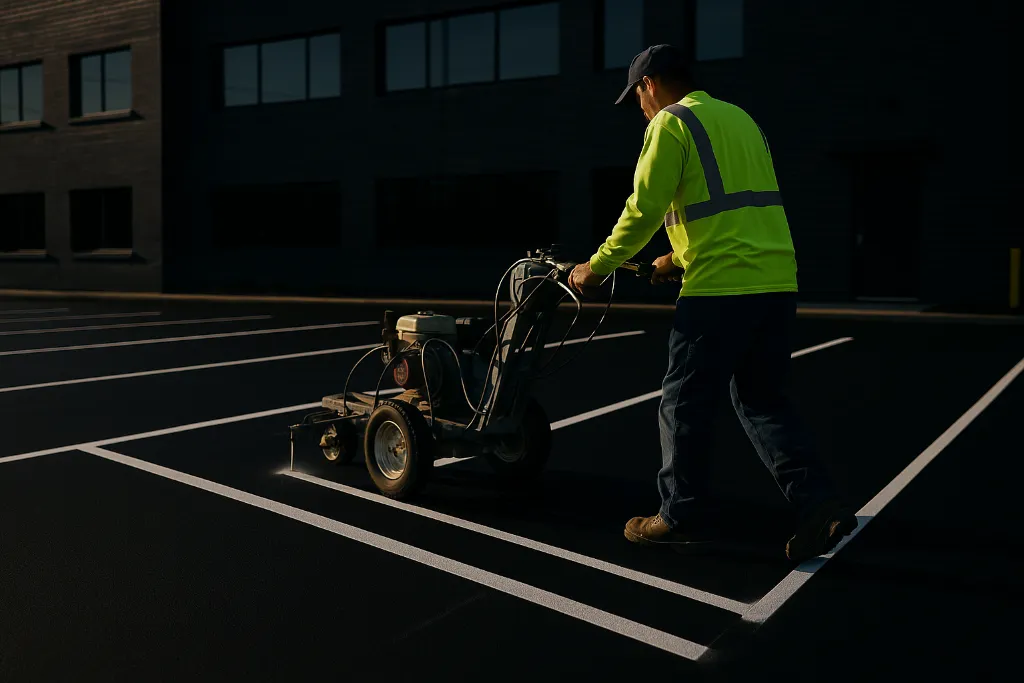
Machine-applied stalls and hand-detailed stencils in high-visibility paint.
Cure & Reopen
Fast-dry paint cures quickly so traffic returns the same night or by morning.
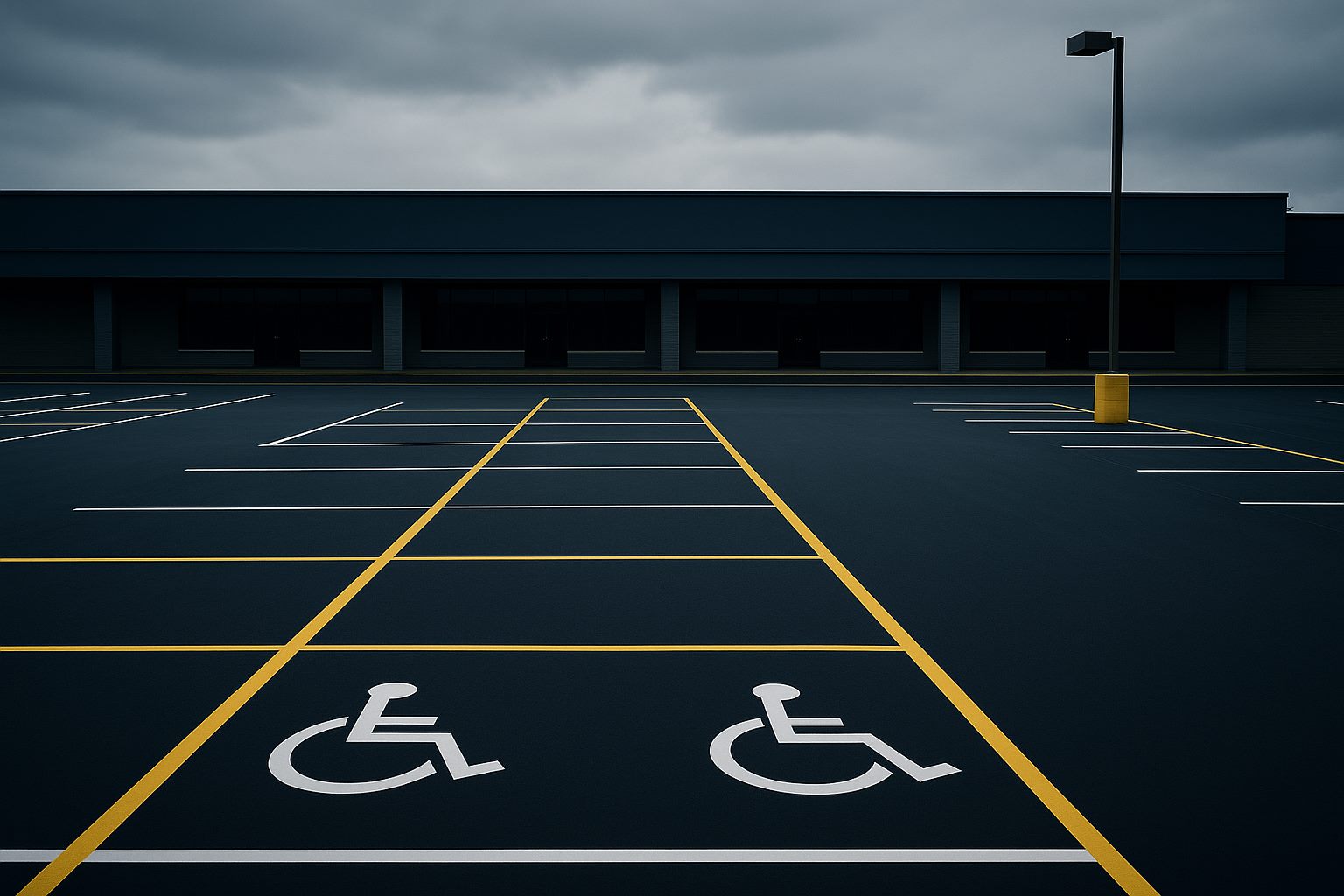
Same Lot. Drag To See The Difference.
From faded and failing to deep-black and like-new. (Representative result.)
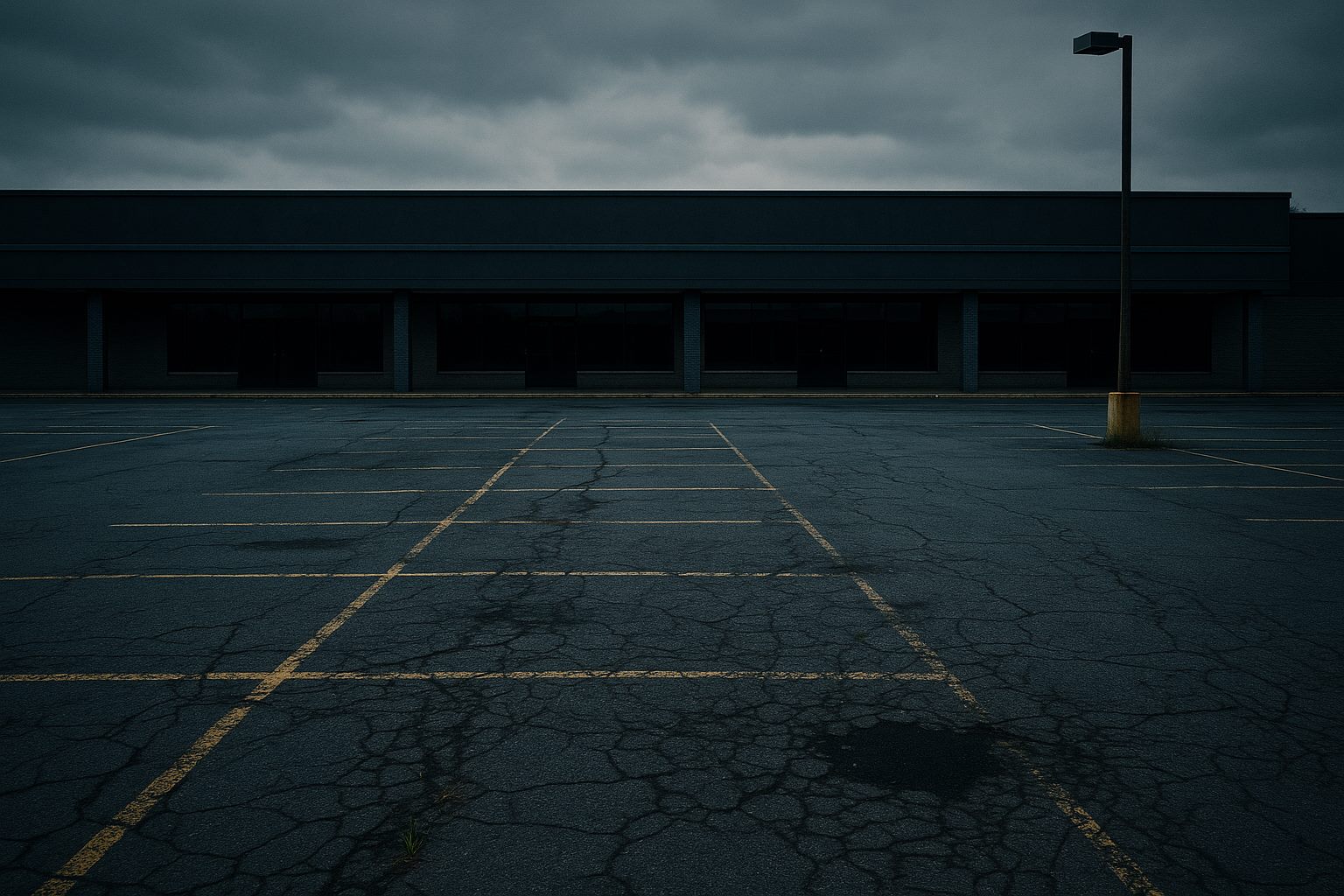
 Before
After
Before
After
How To Tell Your Lot Needs Line Striping
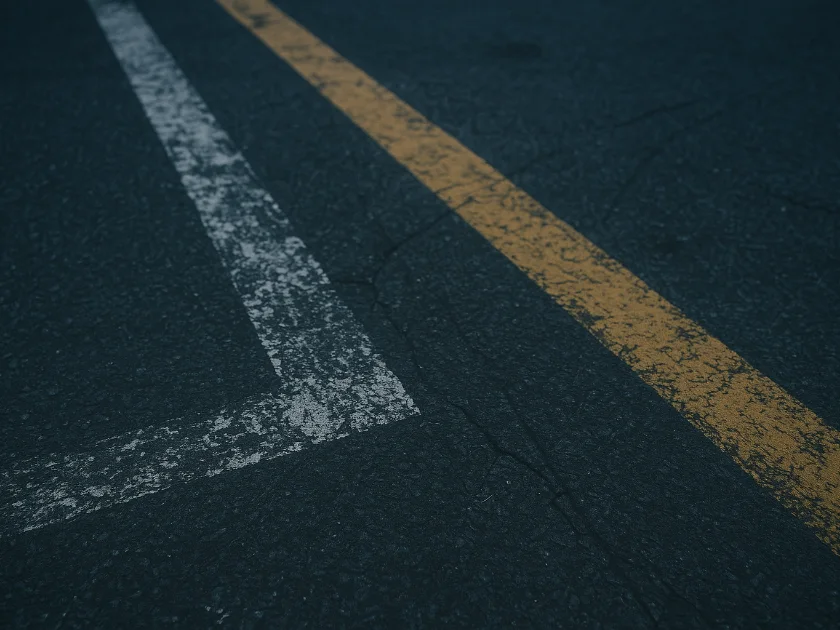
- 01
Drivers are parking crooked
The most reliable signal there is. When stalls stop being obvious at a glance, you lose usable capacity before you lose the paint entirely.
- 02
Fire lanes are no longer clearly legible
This is a compliance and liability exposure rather than an appearance one, and it is the marking most likely to be inspected.
- 03
Accessible stencils and hatching have faded
Worn ADA marking fails a review even when the stall dimensions are correct.
- 04
The layout no longer suits the traffic
Sites change use. A lot laid out for retail rarely suits a medical tenant, and a re-layout often gains stalls on the same asphalt.
What drives the price
Priced mainly by stall count and linear footage, then by what else is on the plan: arrows, hatching, fire lanes, numerals and accessible stencils each add. A straight repaint over an existing legible layout is the cheap case. A full re-layout needs the old lines removed or blacked out and the new plan set out from scratch, which is a different job. Paint grade matters too: standard traffic paint is the default, while high-build or thermoplastic costs more per line and lasts several times longer on entrances and drive lanes that take the most wear.
When line striping is the wrong answer
If the lot is due for sealcoating, striping first is money thrown away, because the sealer goes straight over your new lines. Sequence is always sealcoat then stripe. If a contractor offers to stripe a lot that visibly needs sealing without mentioning that, they are selling you the same job twice.
The Numbers Behind A Striping Plan
Striping is the one service where the specification is visible from a car window for the next two years. These are the figures that decide how it looks and how long it lasts.
Waterborne traffic paint meeting federal specification TT-P-1952E is the default for commercial lots. High-build and thermoplastic cost more per foot and hold several times longer on entrances and drive lanes, which is where you want them.
About 320 linear feet of a standard 4-inch line per gallon. That figure is how you sanity-check a quote against the plan.
4 inches for stall lines. Fire lane markings, crosswalks and loading zones follow whatever your local fire official and municipal ordinance require, and those widths are not the contractor’s to choose.
Waterborne paint keeps volatile organic compound content low, which is why it displaced solvent paint on most commercial work. Solvent-based product still has a place in cold weather and on some surfaces, and it carries handling and air quality restrictions that waterborne does not.
Dropped into the wet paint for night reflectivity. Worth specifying on drive aisles and crosswalks, and generally skipped inside parking bays.
Most New Jersey ordinances land on a 9 by 18 foot standard stall, with 8.5 by 18 permitted for compact bays where the ordinance allows them. Your municipal ordinance governs, and it is worth reading before a re-layout.
24 feet for two-way circulation serving 90-degree stalls. Angled layouts run one-way aisles in the 12 to 15 foot range and are easier to enter, at the cost of stalls per acre.
90-degree parking fits the most cars into a given area. 60 and 45-degree layouts trade capacity for easier turn-in, which suits medical and drive-thru sites where entry speed matters.
A re-layout needs the old lines gone, not covered. Grinding, water blasting or blacking out are the three options, and each leaves a different scar to plan around.
Standards that govern it
Arrows, crosswalks, hatching and legends follow MUTCD conventions, which is what a fire official or plan reviewer expects to see even on private property. Fire apparatus access roads need 20 feet of unobstructed width and 13 feet 6 inches of vertical clearance under IFC 503.2.1, carried into New Jersey through the Uniform Fire Code, and the markings exist to keep that width clear.
Weather window and reopening
Paint wants a dry surface above 50°F and no rain for several hours. Waterborne paint goes no-track in 10 to 30 minutes in good conditions, holds a car within the hour, and keeps hardening for days after that. Overnight striping is normal on occupied retail and medical sites for this reason.
How often, and how long it lasts
Traffic lanes and entrances need repainting at 12 to 24 months. Parking bays with light turnover hold two to three years. The sequence never changes: seal first, stripe after, because sealer goes straight over fresh lines.
How the work is measured
Priced by stall count plus linear footage, with arrows, hatching, numerals, fire lanes and accessible stencils each adding to the plan.
What it costs
A straight repaint over a legible layout runs about $5 to $20 per standard stall, with large lots at the low end because the setup cost spreads further. Accessible stalls are their own line: allow $80 to $150 each for the stall, aisle hatching and stencils, more where signage has to be supplied and set. A full re-layout costs more again, because the old lines have to come off and the new plan has to be set out from scratch.
Prices shown are typical market ranges and are subject to change. They are not a quote. Please call (917) 829-0403 for current pricing, or book the free survey and we will put an itemized number on your property.
Commercial Line Striping By City
What we find, and what the work costs, changes by market. Each page below covers commercial line striping for that city’s own property mix and scheduling constraints.
New Jersey
Across the northern freight corridor: commercial line striping in Newark, commercial line striping in Jersey City, commercial line striping in Elizabeth, commercial line striping in Paterson and commercial line striping in Clifton.
Across the central logistics belt: commercial line striping in Edison and commercial line striping in Woodbridge.
Across the shore and Mercer County: commercial line striping in Toms River, commercial line striping in Hamilton and commercial line striping in Trenton.
We also cover New York City and Long Island and Eastern Pennsylvania. Call (917) 829-0403 and we will tell you whether your property sits on a route we already run.
Line Striping FAQ
How long does fresh striping take to dry?
Commercial traffic paint is typically dry to traffic within 30–60 minutes in good conditions. We schedule overnight or phased work so each section is fully cured before cars return. Most lots are striped and reopened by morning.
Can you add more parking spaces to my lot?
Often, yes. When we re-stripe we lay out the lot to maximize stall count while still meeting ADA and fire-code spacing, many lots gain spaces simply from a smarter layout.
Do you paint fire lanes, arrows and ADA stencils too?
Yes, stalls, fire lanes, stop bars, directional arrows, numbering and ADA accessibility stencils are all part of the job, applied in the same visit.
How often should a commercial lot be restriped?
Most high-traffic commercial lots benefit from restriping every 1–2 years, sooner for entrances and drive lanes. We assess wear and recommend only what the lot actually needs.
What areas do you serve?
New Jersey, the NYC metro, Long Island and Eastern Pennsylvania, under one point of contact and one invoice.
Get Your Line Striping Quote
Free on-site assessment and an itemized quote for any commercial property in the Northeast. Built around your schedule.
Itemized quote within 48 hours · No obligation