Asphalt Paving & Patching
From Pothole Patches To Full Repaves. Built For Commercial Traffic.
Durable asphalt paving, patching and overlays engineered for high-traffic commercial lots, phased around your operation so business never stops.
Free on-site assessment · Itemized quote · No obligation
Failing Asphalt Doesn’t Get Cheaper If You Wait.
Potholes, depressions and crumbling edges are more than ugly. They damage vehicles, trap water and spread. Patch the right areas now or repave the whole lot later; the longer you wait, the bigger the bill.
Potholes & Failures
Open potholes damage tenant and customer vehicles and become liability claims fast.
Base Failure
Where water has destroyed the sub-base, surface fixes won’t hold. It needs full-depth repair.
Spreading Damage
A small failed area pulls down the pavement around it; delay turns a patch into a repave.
The Right Repair For The Right Failure, Not An Upsell
We diagnose whether you need a surface patch, full-depth repair or a complete overlay, then build it to last with proper compaction and drainage. We won’t sell you a repave when a patch will do.
Patching & Pothole Repair
Saw-cut, clean and full-depth patch repairs for isolated failures.
Overlays & Resurfacing
New asphalt mat over sound base to restore a tired but stable lot.
Full-Depth Reconstruction
Remove and rebuild failed areas from the base up where the sub-base is gone.
Proper Drainage & Compaction
Built right so water sheds and the surface holds under heavy traffic.
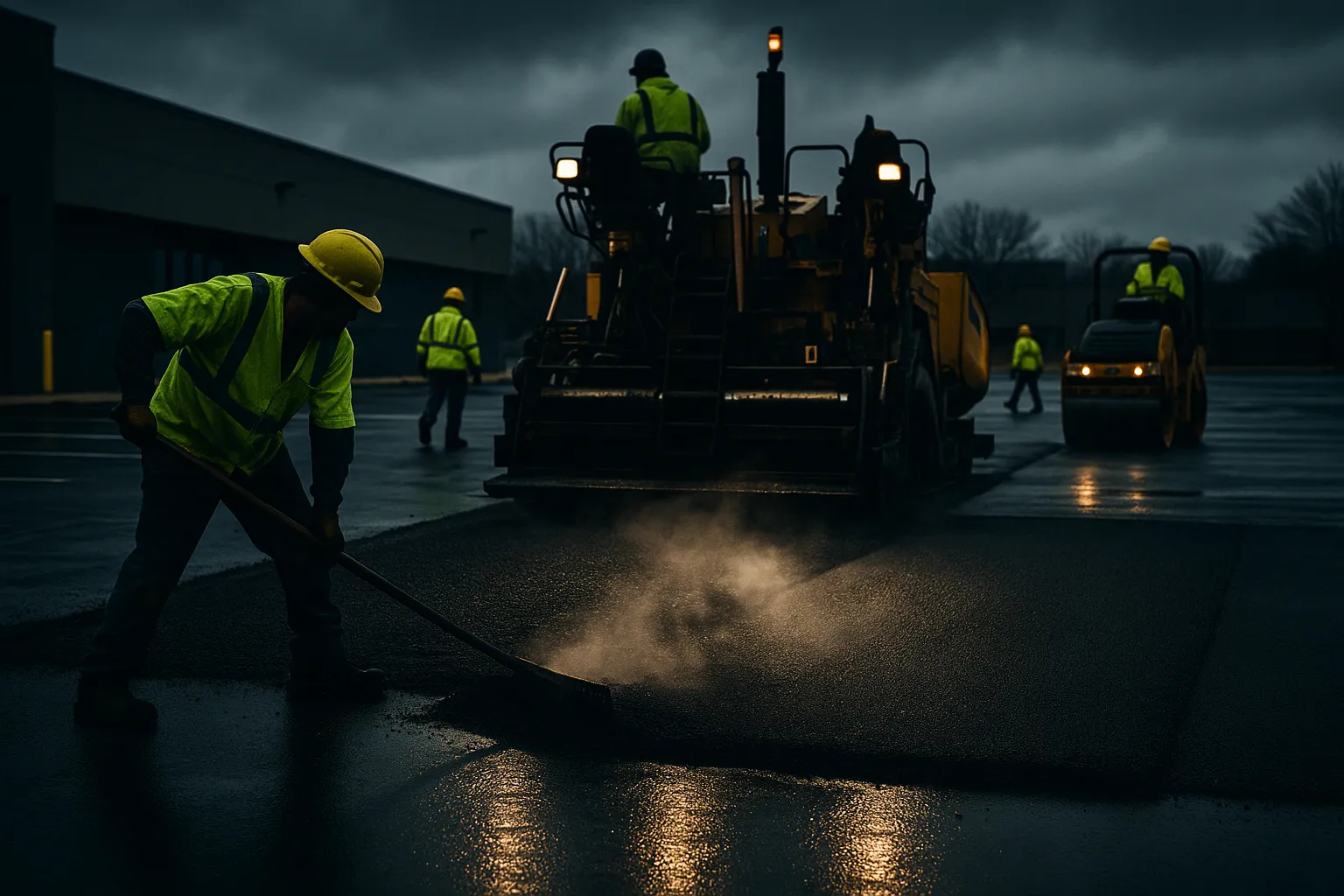
 One crew. Start to finish.
How We Get It Done
Assess & Diagnose
We core the problem areas and determine patch vs. overlay vs. reconstruction.
Cut & Prep
Saw-cut clean edges, excavate failed material and stabilize the base.
Pave & Compact
Lay quality hot-mix asphalt and compact to spec for a durable surface.
Finish & Restripe
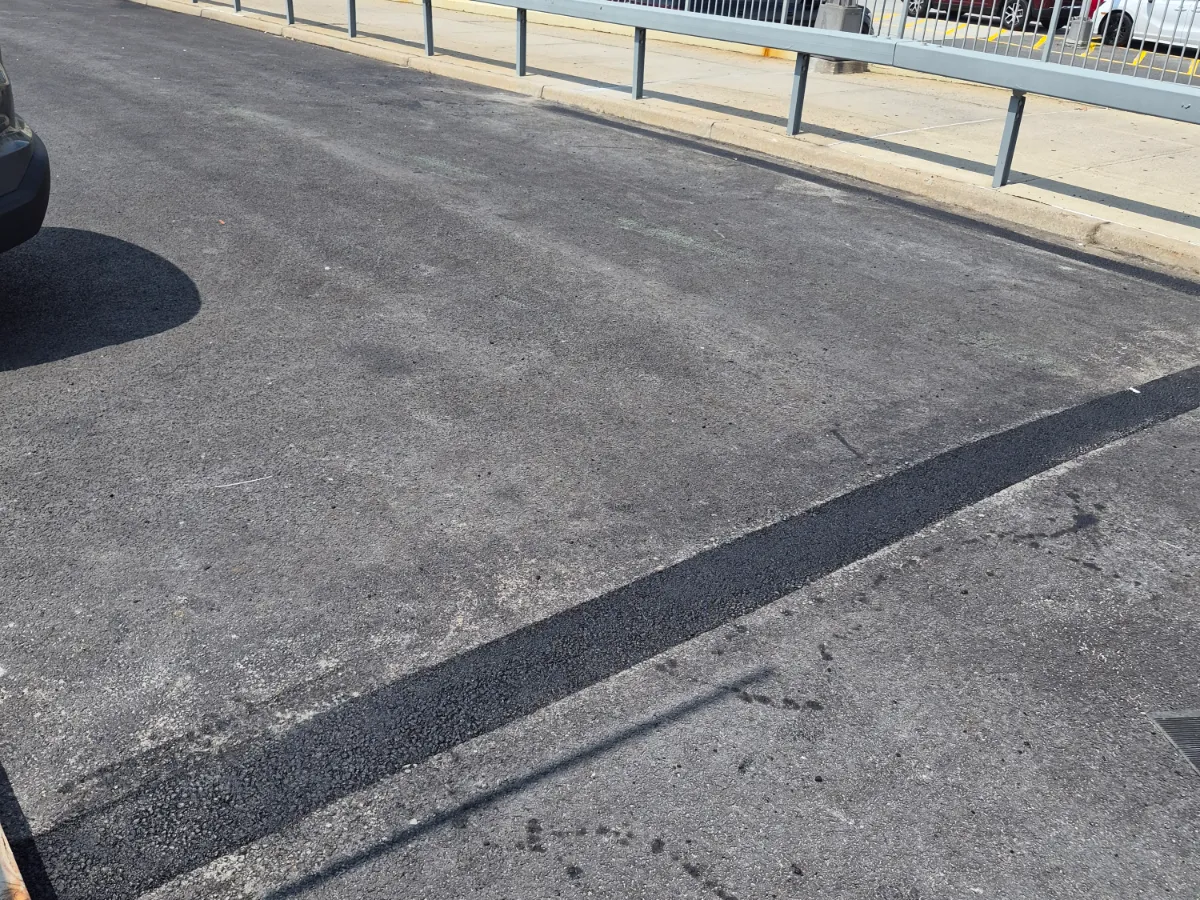
Edges sealed, surface cured, then restriped. One crew, start to finish.
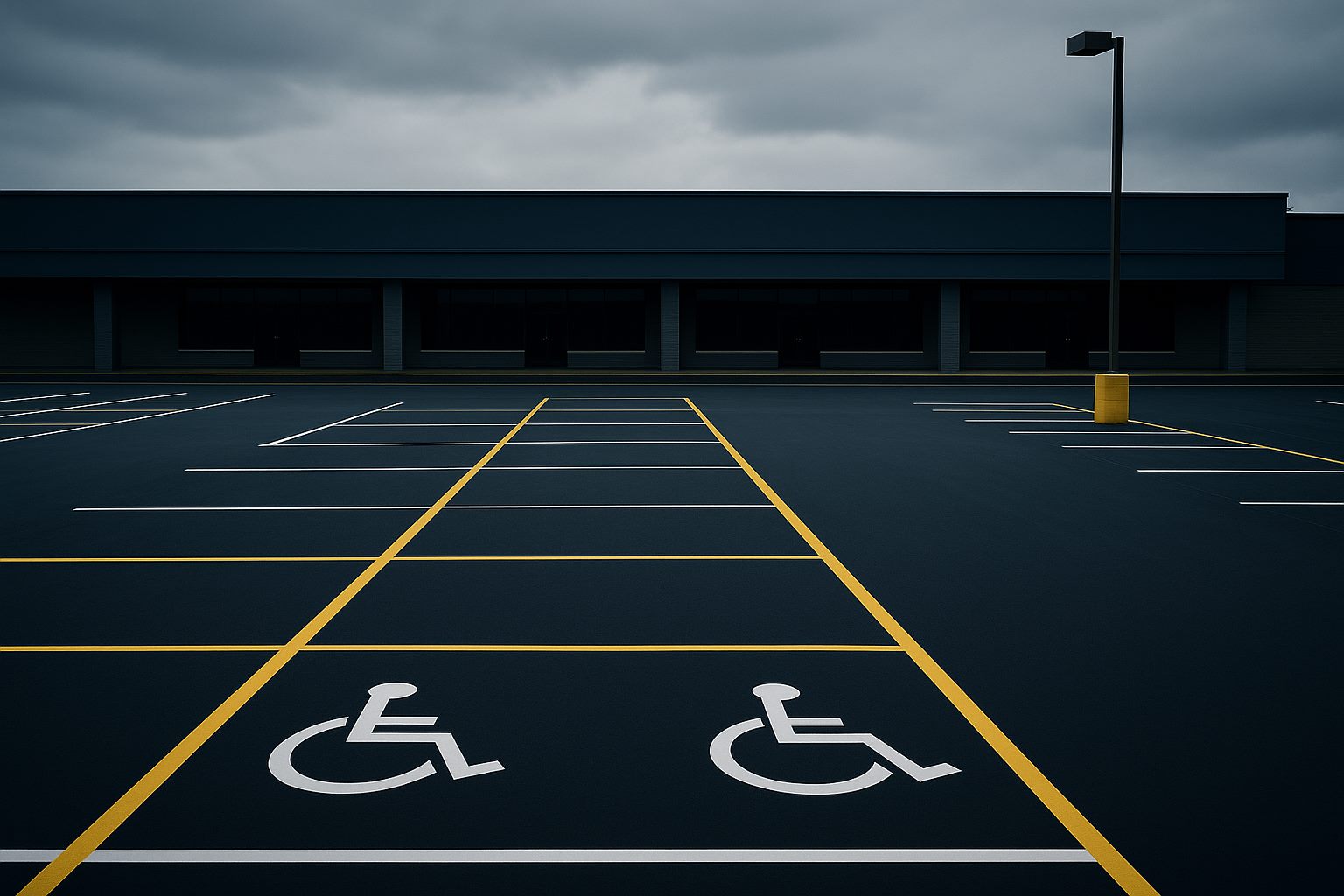
Same Lot. Drag To See The Difference.
From faded and failing to deep-black and like-new. (Representative result.)
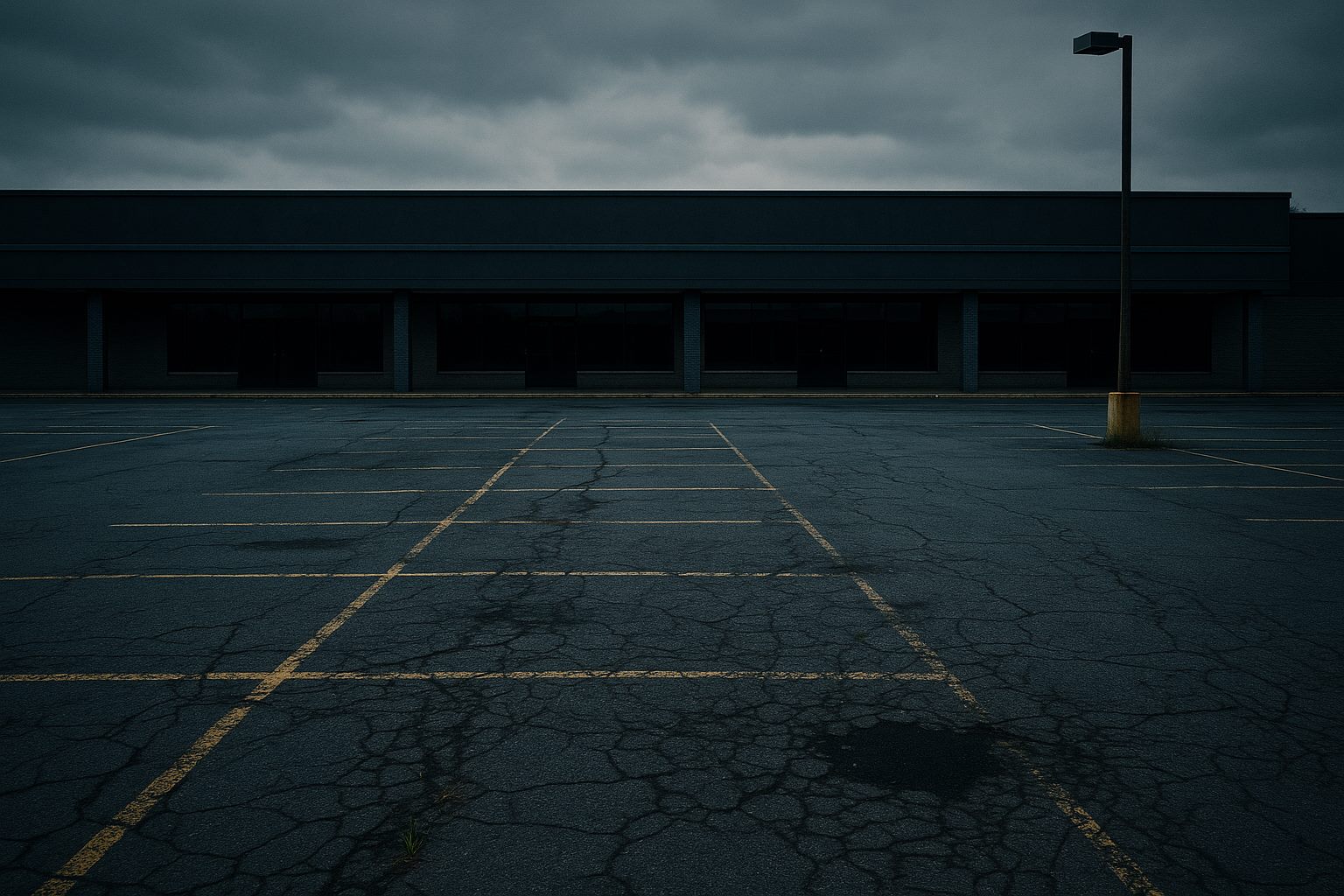
 Before
After
Before
After
How To Tell Your Lot Needs Asphalt Paving
- 01
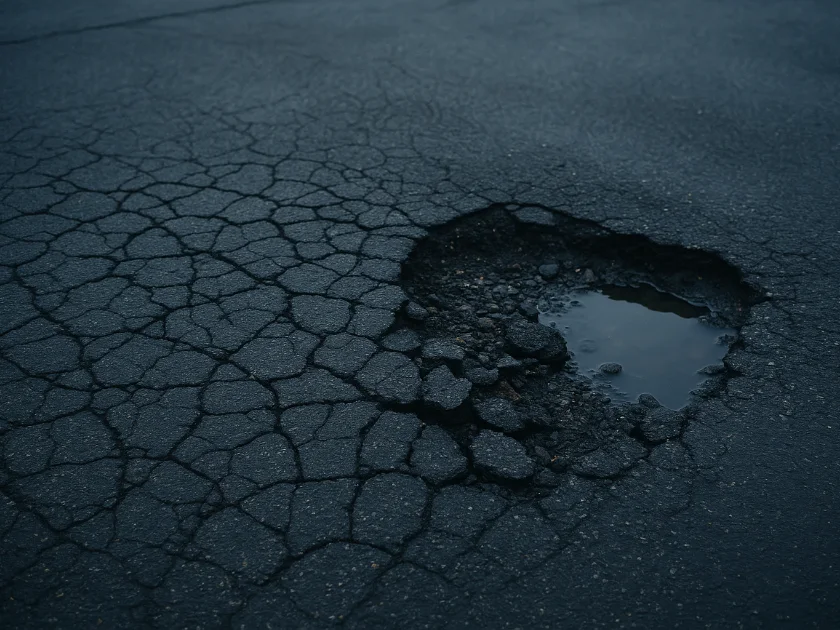
A pothole that keeps coming back in the same place
Recurrence means the base failed, not the patch. Repeated surface patching of the same spot is the most common wasted spend in commercial pavement.
- 02
Alligator cracking
Interconnected cracking in a rough polygon pattern is the classic signature of base failure under load.
- 03
Rutting or depressions where vehicles turn or stop
The pavement is moving under load. No surface treatment reverses that.
- 04
Areas that feel soft or flex when a loaded vehicle crosses
The clearest structural signal available without instruments, and the one most people never think to check.
What drives the price
Driven by depth and area rather than area alone. A surface overlay across sound base is the cheap end. Full-depth reconstruction, cutting out the failed section, repairing or replacing the base and paving back, costs several times as much per square foot and is the only thing that fixes a structural failure. Access matters too: a lot a paver can move through freely is cheaper than one needing small equipment and hand work. Disposal of millings and any need to match existing grades and drainage also feed into the number.
When asphalt paving is the wrong answer
If the base is sound and the problem is surface oxidation, cracking or appearance, paving is a large purchase where a much smaller one would do. Plenty of lots that look finished need crack sealing and a sealcoat. We survey to find out which it is, and on most jobs the honest answer is that only part of the lot is structural and the rest can be maintained.
What Is Actually Under Your Parking Lot
Paving quotes are compared on price per square foot, which hides the only thing that matters: how deep the work goes and whether it reaches the layer that failed.
Subgrade, then dense-graded aggregate base, then asphalt in one or two lifts. A car-parking section typically runs 4 to 6 inches of aggregate base under 3 inches of asphalt. Truck routes, loading docks and dumpster approaches need more of both.
A 9.5 mm Superpave surface mix is the usual choice for a parking area. Heavier-duty areas take a coarser base course under the surface lift.
Milling 1.5 to 2 inches and paving back keeps curb reveal, door thresholds and drainage where they were. Overlaying without milling raises the surface and buries the curb, which is how lots end up with 3 inches of curb and standing water.
Cutting out to and through the base, repairing the subgrade, and paving back. It is several times the cost per square foot of an overlay and it is the only thing that fixes a structural failure.
Infrared patching reheats and reworks the existing surface into a seamless repair and suits shallow surface defects. A saw-cut and remove-and-replace patch is the structural version. Cold patch is a temporary measure for a pothole in February, and treating it as a repair is how the same hole reappears every spring.
Reclaimed asphalt pavement, RAP, is milled material reprocessed into new mix. It is standard in state-specified mixes and it is one of the more heavily recycled materials in construction. Ask what percentage is in the mix if the specification matters to your reporting.
Sprayed between lifts and against every vertical edge. Skipped tack is why an overlay delaminates at the joints two winters later.
Asphalt reaches density while it is hot. A mat that cools before the roller gets to it never gets there, and no amount of surface treatment recovers it.
Asphalt wants 1.5 to 2 percent of fall to move water off it. Ponding after rain means the grade is wrong, and paving over a low spot reproduces the low spot.
Standards that govern it
Mixes follow NJDOT Superpave specifications, which is what a municipal engineer will reference if your work needs a permit or sits in a right of way. Existing pavement is scored under ASTM D6433, and the distress types that push a lot into paving rather than maintenance are alligator cracking, rutting and depressions.
Weather window and reopening
New Jersey asphalt plants run roughly April through November. Late-season mix cools too fast to compact properly, which is why a November price can be a false economy. Cars go back on new asphalt once it cools, usually within 24 hours. Keep loaded trucks off for 48 to 72 hours, and expect power-steering scuffing through the first warm months while the surface hardens.
How often, and how long it lasts
A properly built commercial lot lasts 15 to 25 years when it is sealed and crack-sealed on schedule. An overlay buys 10 to 15. Deferring maintenance does not extend either number, it moves the lot from the maintenance budget into the capital budget years early.
How the work is measured
Priced by the square foot or by the ton of mix. Depth, access and disposal of millings change the number more than area does.
What it costs
A 1.5 to 2 inch mill and overlay on sound base runs roughly $2.80 to $4.50 per square foot. New commercial paving in New Jersey lands between $2 and $7 per square foot depending on depth and site access. Full-depth reconstruction of a failed area sits at the top of that spread, which is why the survey matters: on most lots only part of the area needs it.
Prices shown are typical market ranges and are subject to change. They are not a quote. Please call (917) 829-0403 for current pricing, or book the free survey and we will put an itemized number on your property.
Asphalt Paving & Patching By City
What we find, and what the work costs, changes by market. Each page below covers asphalt paving & patching for that city’s own property mix and scheduling constraints.
New Jersey
Across the northern freight corridor: asphalt paving & patching in Newark, asphalt paving & patching in Jersey City, asphalt paving & patching in Elizabeth, asphalt paving & patching in Paterson and asphalt paving & patching in Clifton.
Across the central logistics belt: asphalt paving & patching in Edison and asphalt paving & patching in Woodbridge.
Across the shore and Mercer County: asphalt paving & patching in Toms River, asphalt paving & patching in Hamilton and asphalt paving & patching in Trenton.
We also cover New York City and Long Island and Eastern Pennsylvania. Call (917) 829-0403 and we will tell you whether your property sits on a route we already run.
Asphalt Paving FAQ
Do I need a patch or a full repave?
It depends on how much of the base has failed. Isolated surface failures take a patch; widespread base failure needs full-depth repair or reconstruction. We core and assess, then recommend the smallest fix that will actually last. We don’t upsell repaves.
How long before we can drive on new asphalt?
Fresh asphalt is usually ready for traffic within 24–48 hours once it cools and cures. We phase the work so only sections are closed at a time and your lot keeps operating.
Can you work nights and weekends?
Yes. For active commercial properties we schedule overnight and weekend phases so paving doesn’t shut down your tenants’ business.
Do you restripe after paving?
Always. Fresh striping, ADA stencils and fire lanes go back down once the new asphalt cures, handled by the same crew.
What areas do you serve?
New Jersey, the NYC metro, Long Island and Eastern Pennsylvania, on one point of contact and one invoice.
Get Your Asphalt Paving Quote
Free on-site assessment and an itemized quote for any commercial property in the Northeast. Built around your schedule.
Itemized quote within 48 hours · No obligation