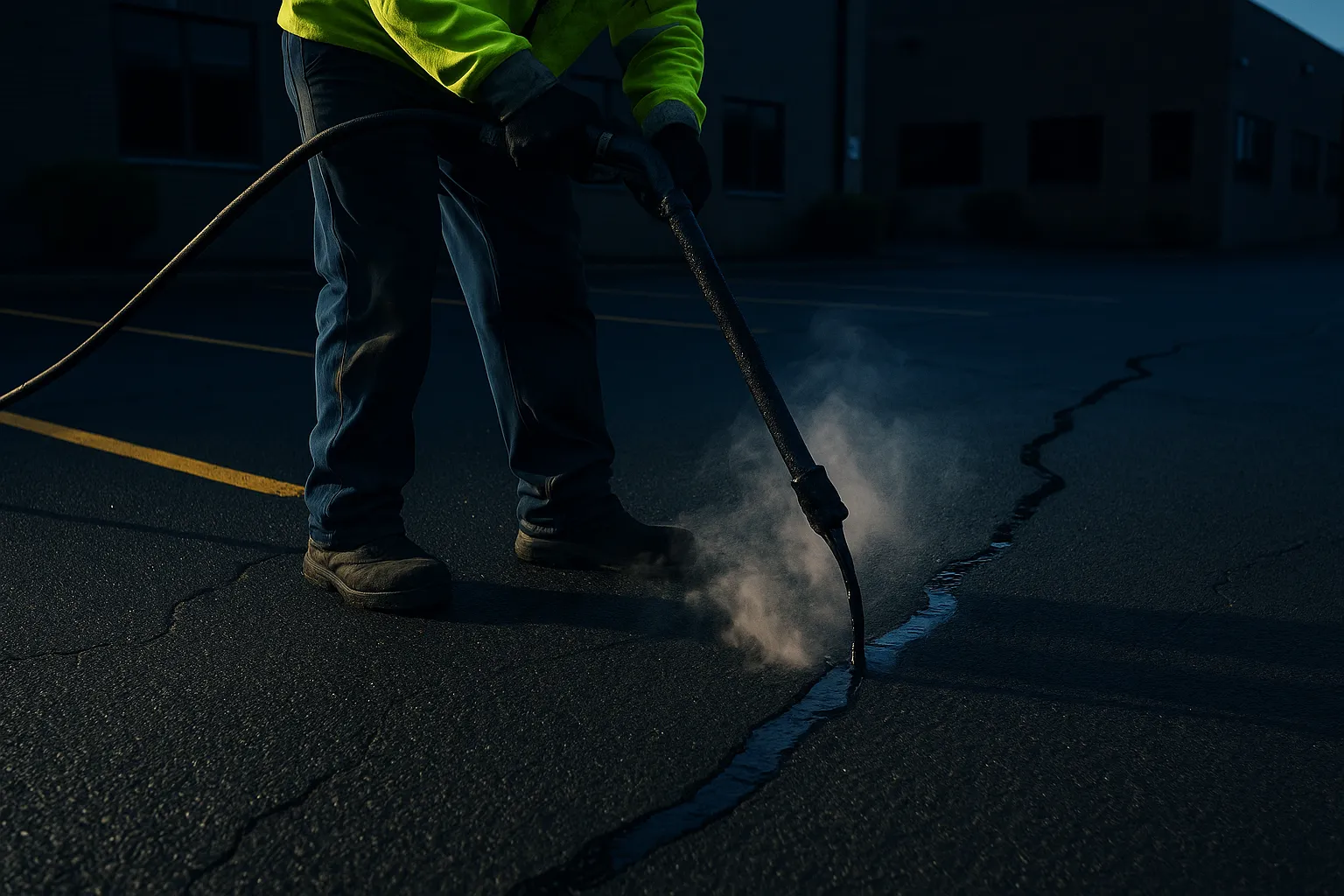
Asphalt Crack Repair
Seal The Cracks Now, Before They Become Potholes.
Hot-applied crack filling that stops water before it gets under your pavement, the highest-ROI move to keep small cracks from turning into a full repave.
Free on-site assessment · Itemized quote · No obligation
Every Crack Is A Doorway For Water. And Water Destroys Asphalt.
Cracks let water reach the base layer. Northeast freeze-thaw expands it, the base fails, and a hairline crack becomes a pothole, then a costly reconstruction. Crack filling is cheap insurance against all of it.
Water Intrusion
Unsealed cracks funnel water into the sub-base, where freeze-thaw cycles pry the pavement apart from below.
Accelerating Damage
One ignored crack spreads into a web, then potholes, each season of delay multiplies the repair cost.
Trip & Tire Hazard
Wide cracks and the potholes they cause are liability claims and unhappy tenants waiting to happen.
Hot-Rubber Crack Fill That Actually Bonds and Flexes
We rout and clean the crack, then fill with hot-applied rubberized sealant that bonds to the walls and flexes with the seasons, not the cold-pour caulk that pops out by spring.
Clean & Rout
We blow out debris and vegetation so the sealant bonds to clean asphalt, not dirt.
Hot-Applied Rubber
Melted rubberized sealant penetrates and flexes through freeze-thaw cycles.
Fast Return To Service
Cracks are filled and trafficable quickly, minimal disruption to your lot.
The Smart First Step
Done before sealcoating so your whole pavement program lasts longer.
 One crew. Start to finish.
How We Get It Done
Inspect & Map
We walk the lot and identify which cracks to fill and which areas need patching instead.
Clean & Prep
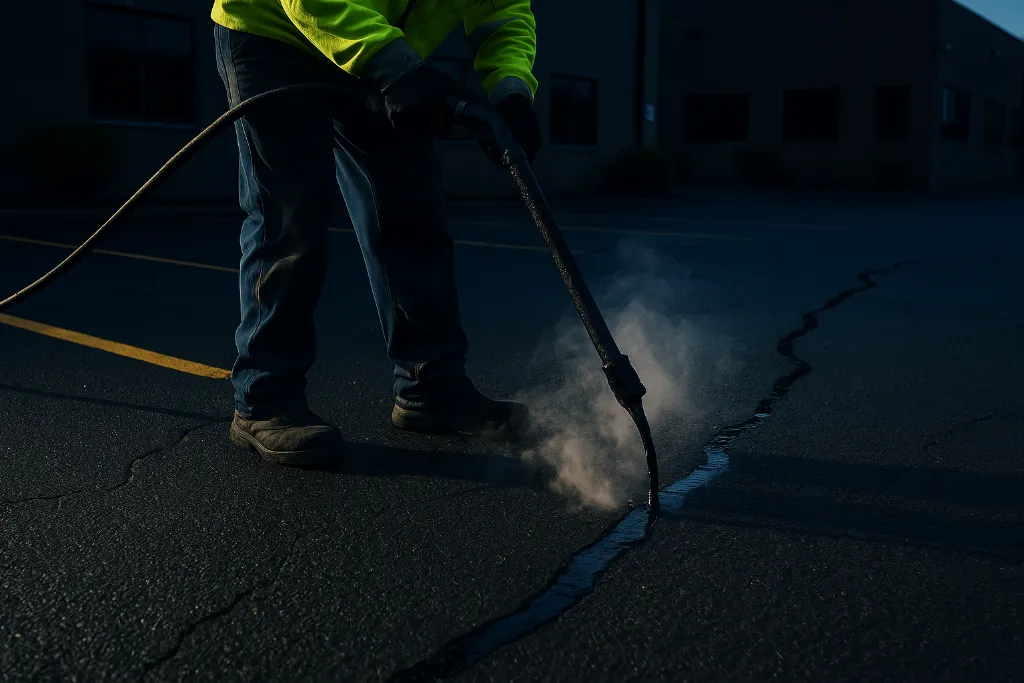
Compressed air and wire-wheel cleaning removes debris and weeds from each crack.
Hot-Pour Fill
Rubberized sealant is applied hot, filling the crack and bonding to both walls.
Level & Reopen
Sealant is leveled flush and cures fast, the lot reopens with minimal downtime.
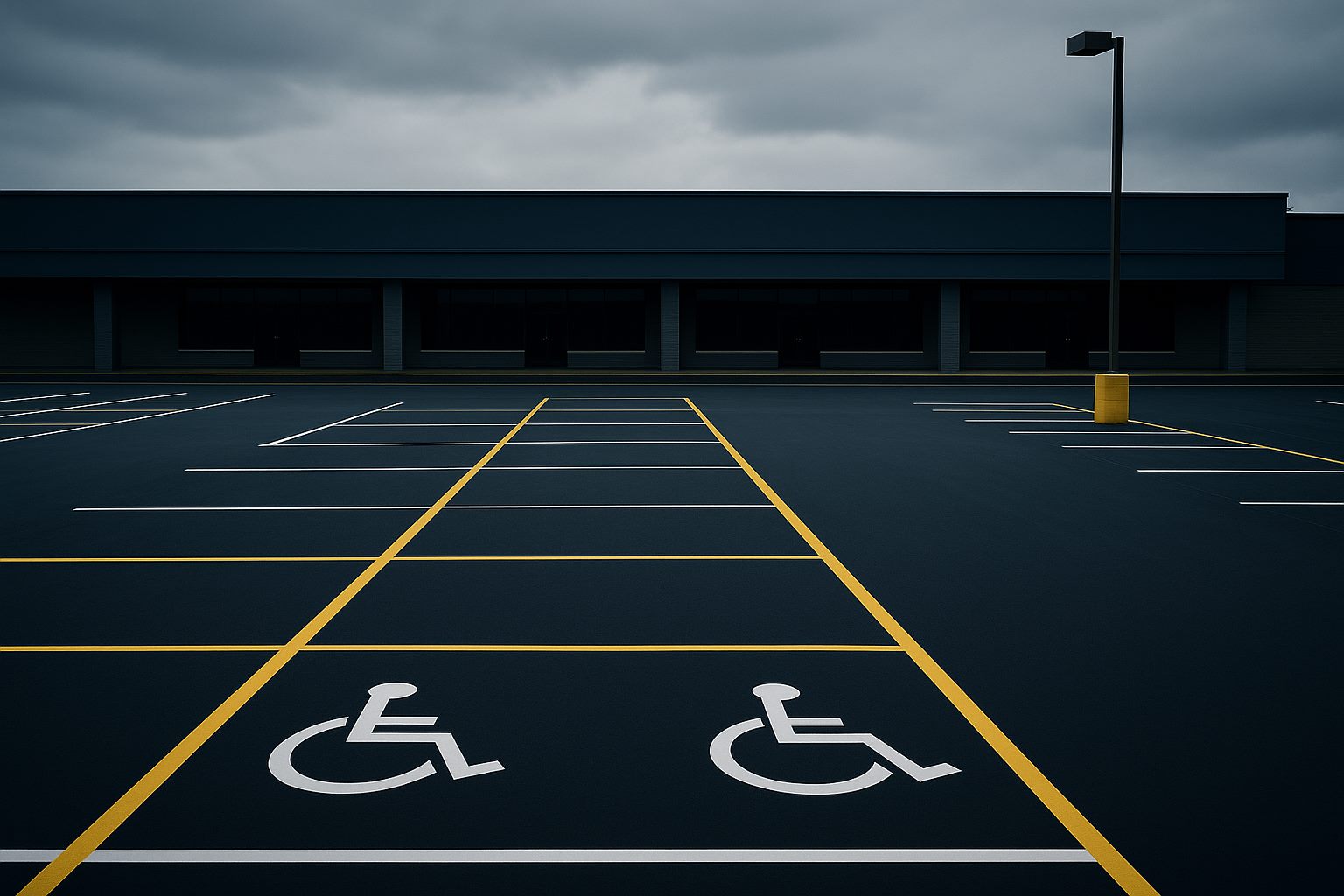
Same Lot. Drag To See The Difference.
From faded and failing to deep-black and like-new. (Representative result.)
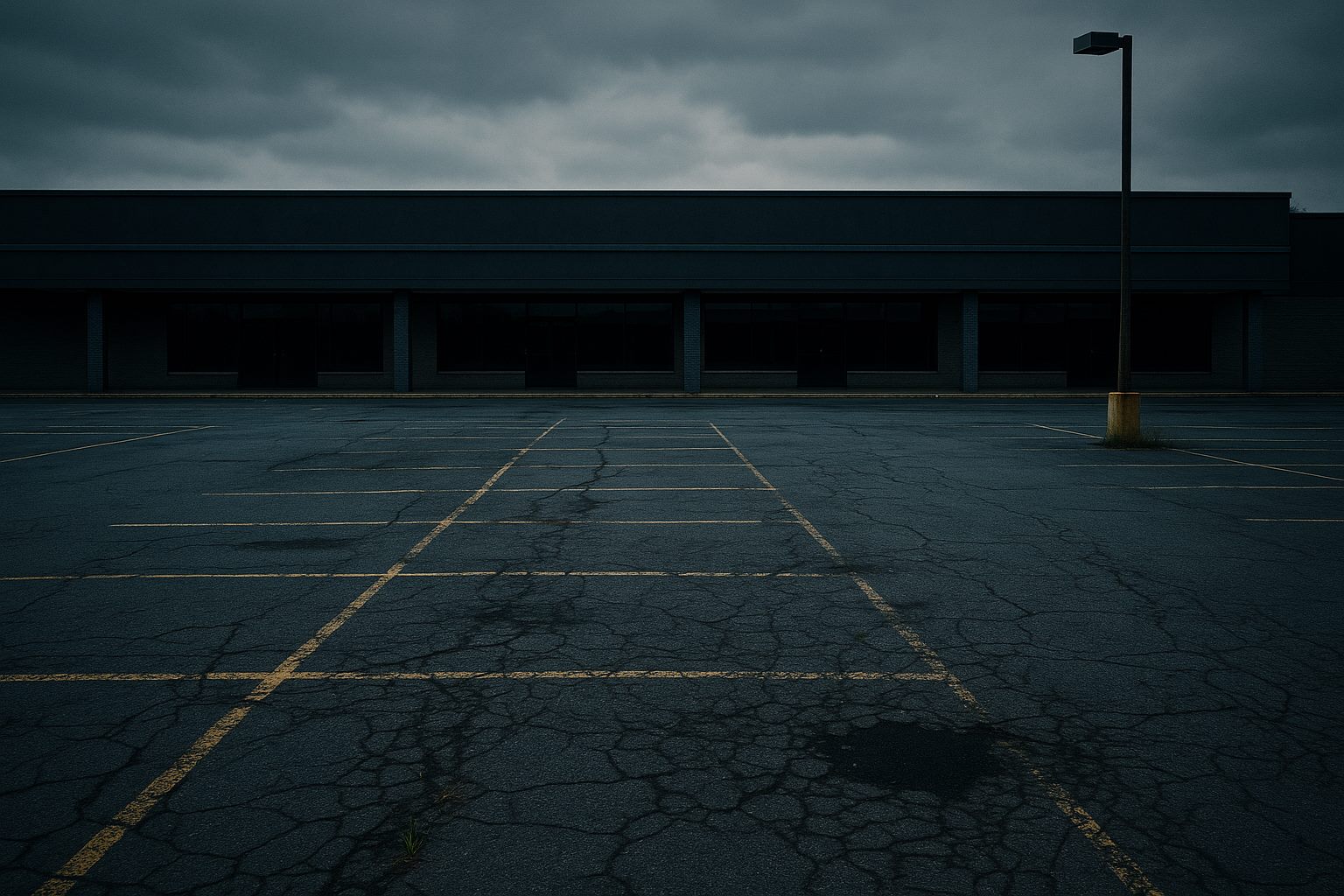
 Before
After
Before
After
How To Tell Your Lot Needs Crack Repair
- 01
Cracks wide enough to take a coin
Roughly a quarter-inch is the threshold where a crack reliably admits and holds water. Below that it usually still seals; above it, it is collecting.
- 02
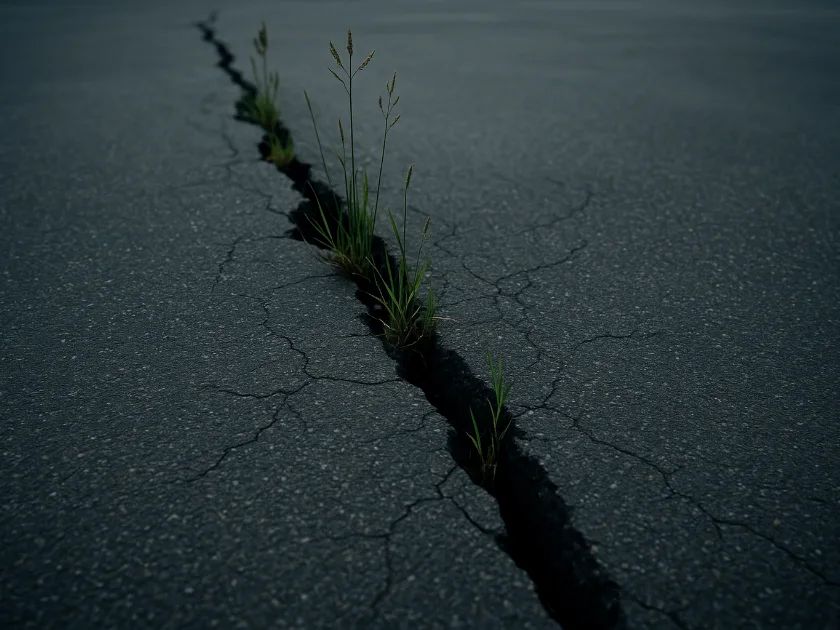
Anything growing in the cracks
Vegetation means the crack is holding moisture and soil, and roots widen it every season. It also means the crack reaches the base.
- 03
Cracks running along the perimeter edges
Edge cracking is often the first structural sign, because the pavement edge is unsupported and moves most.
- 04
A crack that has started branching
A single line becoming a network is the transition from a sealable crack to base failure. Caught at the branching stage it is still cheap.
What drives the price
Priced by linear foot, with the variable being preparation. Cracks that only need cleaning and filling are the low end. Cracks that need routing, cutting a consistent channel so the filler has something to key into, cost more per foot and hold far longer. Hot-applied rubberized material costs more than cold pour and stays flexible through the temperature swing, which in New Jersey is the difference between a repair that survives a winter and one that does not.
When crack repair is the wrong answer
Once cracking has become interconnected alligator pattern across an area, crack filling is no longer the answer for that area. The base underneath has failed and filling the surface pattern just traces it. That section needs cutting out and paving back. We will fill the sound cracks and quote the failed area separately rather than pretending a filler will hold it together.
Crack Sealing By The Numbers
Crack work is cheap when it is specified properly and worthless when it is not. The difference is measurable before anyone starts.
Hot-applied rubberized sealant meeting ASTM D6690. The standard covers four types graded by climate, and New Jersey needs one rated for the low end rather than the moderate-climate grade sold on price.
Cold-applied material suits narrow, low-movement cracks and small quantities. It costs less per foot and it does not stay flexible through a Northeast winter, so it belongs on the light work.
Roughly a quarter inch to an inch wide. Below an eighth of an inch there is nothing to fill. Above an inch, or once cracks interconnect into an alligator pattern, the answer is patching and no sealant will hold it.
Cutting a reservoir gives the sealant a shape to key into instead of a smear across the surface. A routed and sealed crack outlasts a filled one by years, and it is the single line item most often missing from a cheap quote.
Used in deep cracks to control sealant depth. Without it, material sinks and you pay for volume that does no work.
Cracks have to be dry and clean. Compressed air, a hot air lance or a wire wheel depending on what is in there. Vegetation gets killed rather than pulled, because the roots are the reason the crack is widening.
Transverse cracks run across the drive direction and come from temperature cycling. Longitudinal cracks follow it and usually sit over a paving joint. Block cracking covers an area in rough rectangles and means the binder has aged out. Reflective cracking traces a joint or crack in an older layer underneath. The first two seal well. The last two are telling you about the pavement rather than the crack.
A band of sealant left proud of the surface sheds water off the joint and shows as a dark stripe. Squeegeed flush looks better under a fresh sealcoat. Decide which you want before the crew arrives.
Standards that govern it
ASTM D6690 types I through IV set the low-temperature performance of the material, tested to -18°C and -29°C at 50 percent extension depending on grade. Cracks are also the distress that drives a ASTM D6433 pavement condition index score down fastest, because they are what lets water reach the base.
Weather window and reopening
Dry weather, pavement above roughly 40°F, and a crack with no moisture in it. Hot-applied material sets enough for traffic in 30 to 60 minutes, so a lot sealed in the morning is back in service the same day.
How often, and how long it lasts
Annually or every other year on a commercial lot, and always before sealcoating. A crack sealed in year one costs a fraction of the patch it becomes in year four, which is the whole economic argument for the service.
How the work is measured
Priced by the linear foot, with routing and preparation moving the rate more than quantity does.
What it costs
Direct seal with no routing runs about $0.90 to $1.50 per linear foot. Routed and sealed, which is the version that lasts, runs $1.50 to $3.00 per linear foot. The difference is preparation rather than material, and it is the line most often missing from the cheaper of two quotes.
Prices shown are typical market ranges and are subject to change. They are not a quote. Please call (917) 829-0403 for current pricing, or book the free survey and we will put an itemized number on your property.
Asphalt Crack Repair By City
What we find, and what the work costs, changes by market. Each page below covers asphalt crack repair for that city’s own property mix and scheduling constraints.
New Jersey
Across the northern freight corridor: asphalt crack repair in Newark, asphalt crack repair in Jersey City, asphalt crack repair in Elizabeth, asphalt crack repair in Paterson and asphalt crack repair in Clifton.
Across the central logistics belt: asphalt crack repair in Edison and asphalt crack repair in Woodbridge.
Across the shore and Mercer County: asphalt crack repair in Toms River, asphalt crack repair in Hamilton and asphalt crack repair in Trenton.
We also cover New York City and Long Island and Eastern Pennsylvania. Call (917) 829-0403 and we will tell you whether your property sits on a route we already run.
Crack Repair FAQ
When is a crack too far gone to fill?
Hairline to roughly half-inch cracks are ideal for filling. Once cracks are very wide, alligatored, or the base has failed, filling won’t hold, those areas need patching or removal and replacement, which we’ll flag honestly during the assessment.
Should I crack fill or sealcoat first?
Crack fill first, always. Sealcoat is a thin surface coating, not a filler, sealing over open cracks just hides them. We fill cracks, then sealcoat over a sound surface.
How long does crack fill last?
A quality hot-rubber fill typically lasts several years. Because it flexes with temperature swings, it holds up to Northeast freeze-thaw far better than cold-pour products.
Will the repair be visible?
Filled cracks show as clean black lines, flush with the surface. If we sealcoat afterward, they blend into a uniform deep-black finish.
What areas do you serve?
New Jersey, the NYC metro, Long Island and Eastern Pennsylvania. One vendor, one invoice across your whole portfolio.
Get Your Crack Repair Quote
Free on-site assessment and an itemized quote for any commercial property in the Northeast. Built around your schedule.
Itemized quote within 48 hours · No obligation