
Commercial Parking Lot Maintenance in New Jersey
Sealcoating, striping, crack repair, paving and ADA work for commercial property from the port cities to the shore. One crew, one schedule, one invoice.
Free on-site assessment · Itemized quote · No obligation
Why Pavement Here Ages Faster Than The Spec Sheet Says
New Jersey sits on the freeze-thaw line, and that single fact drives most of what goes wrong with commercial pavement in this state. A winter here does not freeze once and hold. It crosses freezing dozens of times, and every crossing pushes water further into any opening in the surface and then expands it. A hairline crack in fall is a spalled edge by March and a pothole the winter after.
Road salt compounds it. Salt does not attack asphalt directly, but it keeps meltwater liquid at temperatures where it would otherwise sit frozen and inert, so the water travels deeper before it refreezes. Any lot taking plow and salt traffic through the winter shows the result by spring, and the shore properties take salt from the air on top of that.
The practical consequence is that maintenance intervals borrowed from a milder or a consistently colder climate are wrong here. Crack sealing carries more weight in New Jersey than almost anywhere, because it is the step that keeps water out of the base before the freeze-thaw cycle can use it.
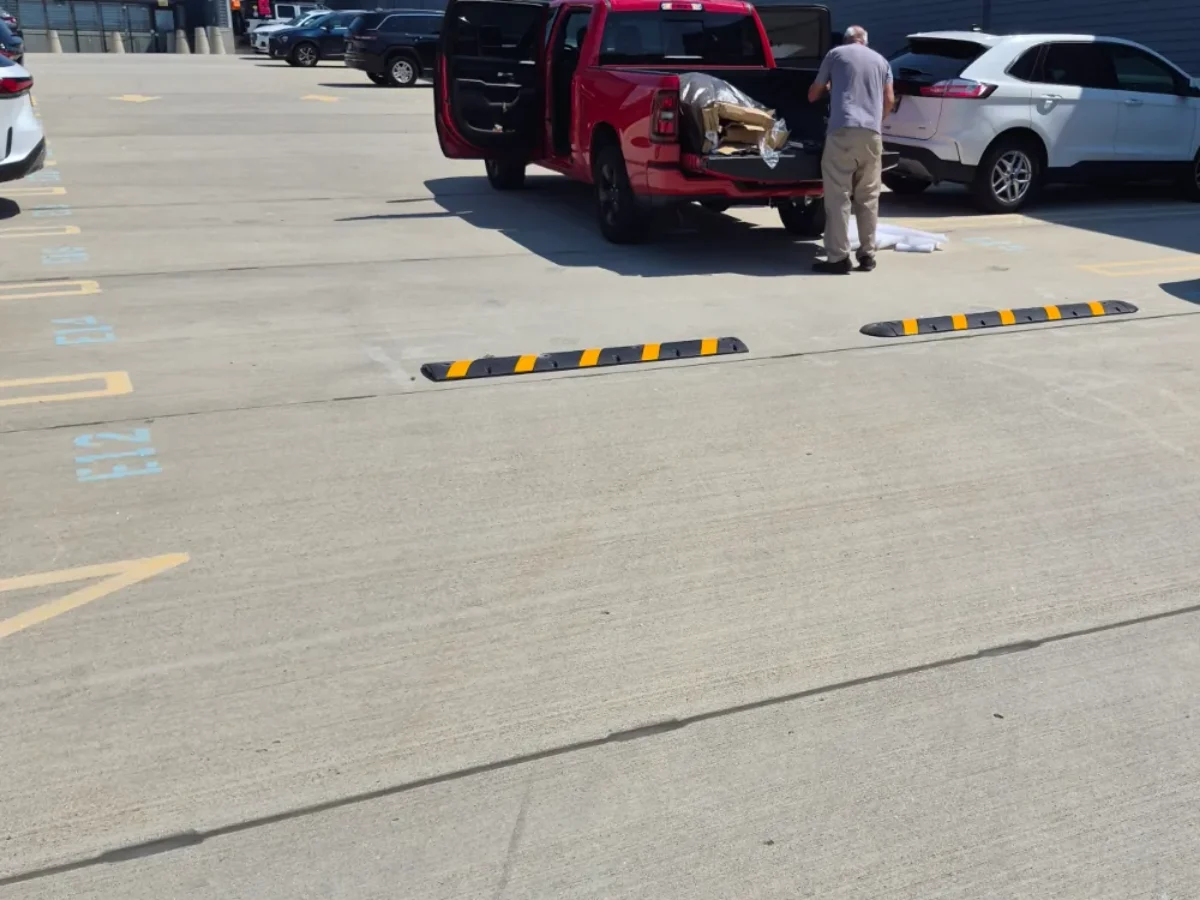 On a New Jersey lot
The Seasons, Codes And Limits That Apply Here
Climate decides when the work can happen. Code decides what it has to look like when it is finished. Both are specific in New Jersey, and both belong in a schedule before anyone quotes a date.
- Ultraviolet oxidation Sunlight hardens the binder holding the aggregate together. The color going from black to gray is the visible stage of it, and raveling is the next one.
- Petroleum contact Fuel, motor oil and hydraulic fluid dissolve asphalt binder. Contact happens in the same spots every day, which is why lots fail in patches rather than evenly.
- The working season Sealer and paint want pavement above 50°F, hot mix plants run roughly April through November, and crack sealing works in cooler and drier conditions than either. Sequencing a year of work around those three windows is most of what a maintenance plan does.
- Fire code marking Fire apparatus access roads need 20 feet of unobstructed width and 13 feet 6 inches of vertical clearance under IFC 503.2.1, carried into New Jersey through the Uniform Fire Code. Your local fire official decides the marking and the wording.
- Barrier free requirements Accessible parking on a New Jersey commercial property answers to the federal 2010 ADA Standards and to the state barrier free subcode. Passing one is not the same as passing both.
- Stormwater discharge Wash water and removal runoff carrying detergent, grease or pigment are not supposed to enter a storm inlet. New Jersey municipalities run these programs under NJDEP stormwater permits, so the rule reaches private property. On sites draining to a municipal system, containment is part of the job rather than an extra.
- Plow and blade damage A steel blade catches raised edges, manhole frames and the lip of a patch, and it tears sealer off the high spots. Marking snow storage areas and flagging the catch points before winter costs nothing and saves the repair.
- Condition scoring A pavement condition index survey under ASTM D6433 puts a 0 to 100 number on a lot from measured distress rather than opinion. That number is what turns “the lot looks tired” into a budget line and a sequence you can defend to an owner.
Ten New Jersey Cities, Three Very Different Jobs
The state is not one market. A container yard in Elizabeth and a shore retail center in Toms River need different specifications, different scheduling and different intervals. Pick your city for what we actually find there.
The northern freight corridor
Port traffic, warehousing and dense urban property. Heavy axle loads and night work.
Central logistics and highway retail
Distribution parks and high-volume retail off the Turnpike and Parkway.
The shore and the capital
Coastal exposure, seasonal trade, and institutional property around Trenton.
Properties In Several Towns, One Schedule
Most of the people who call us manage more than one site, and the problem they describe is rarely the pavement. It is that each property has its own contractor, its own renewal date and its own invoice, and nobody has a view of which site is closest to needing real money spent on it.
We survey the whole portfolio in one pass and rank it by condition rather than by whoever complained most recently. You get a multi-year schedule, a budget you can take to ownership, and the work sequenced so the sites that are still sound stay that way rather than being resurfaced because they were on the list.
New Jersey Commercial Pavement FAQ
Does New Jersey weather really change the maintenance schedule?
Yes, and more than most owners expect. New Jersey runs through the freeze-thaw line dozens of times a winter rather than freezing once and staying frozen. Every cycle drives water further into any crack it can reach and then expands it. That is why crack sealing matters more here than in a consistently cold climate, and why a crack you ignore in October is a pothole by March.
What does road salt do to a private lot?
Salt itself does not attack asphalt the way it attacks concrete, but the meltwater it creates does. Salt keeps water liquid at temperatures where it would otherwise stay frozen and harmless, so it moves into the pavement and refreezes deeper. Lots that take heavy plow and salt traffic through the winter show accelerated surface damage by spring, and shore properties get salt exposure year round from the air as well.
We have properties in several New Jersey towns. Can that be one contract?
Yes, and it is the main reason portfolio managers call us. We survey every site once, rank them by urgency rather than by squeaky wheel, and give you a multi-year schedule and budget across the portfolio on one invoice cycle. You get one number to call instead of a contractor per town.
How far into New Jersey do you actually go?
We run routes across the northern corridor, the central logistics belt and down to the shore and Trenton. If your property is in a town not listed on this page, call and we will tell you right away whether you are on a route we already run. We would rather say no than send a crew two hours each way and price it into your quote.
When is the best time of year to schedule work?
Sealcoating and striping need surface temperatures that hold above roughly fifty degrees, which in New Jersey means broadly April to October. Crack sealing has a wider window. The practical advice is to survey in late winter and book early, because everyone in the state wants the same twenty weeks and the calendar fills from the front.
Get Your New Jersey Quote
Free on-site assessment and an itemized quote for any commercial property in New Jersey.
Free on-site assessment · Itemized quote · No obligation